NERC
-
Operational Data and Communications: The Final Draft of NERC's Proposed Standard for Computational Load Sites
NERC's final draft of CLO-002-1, dated October 2026, would require each Computational Load Operator to "comply with each Operating Instruction issued by its Transmission Operator(s), Balancing Authority, or Reliability Coordinator," unless the action cannot be physically implemented or would violate safety, equipment, regulatory or statutory requirements. Its timetable anticipates board adoption in the fourth quarter of 2026.
-
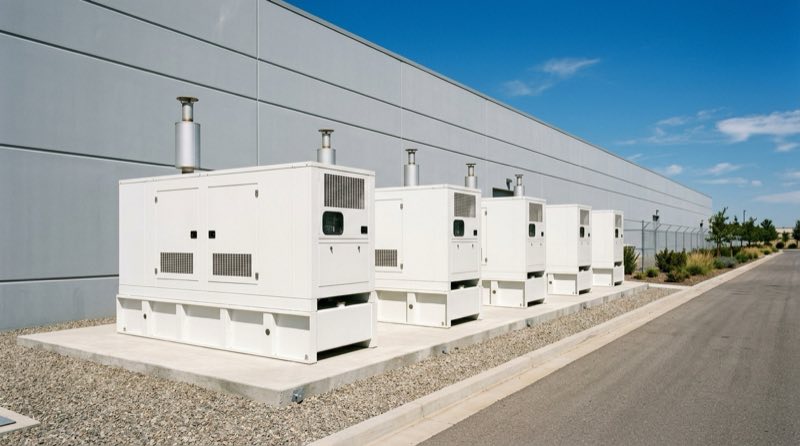
Backup Generation as a Last Resort: The Energy Department's Order No. 202-26-50 to PJM
The U.S. Department of Energy's Order No. 202-26-50 determines that a statutory emergency exists in the PJM region. It authorizes PJM to direct backup generation resources to operate as a last resort before declaring an EEA 3, or during one, and it says such a resource is not a capacity resource.
-
Loads That Leave the Grid: NERC's Reliability Insights on Large Computational Loads and Voltage Sensitivity
NERC's Reliability Insights of September 2026 describes large computational loads, data centers among them, that remove themselves from the grid when the voltage dips, in what it calls a familiar pattern. It reports changes by data centers that may have reduced the load lost in one event, and a load reduction in Virginia in July 2026 whose specifics are still being analyzed.
-
"Fault Cleared Properly": PJM Reviews Its Load Transfer Events
PJM's operational review of October 6 lists three dates on which load transferred to backup generation. The slide for each describes a fault on a transmission line and carries the same line: fault cleared properly.
-
"They Should Not Disconnect From the Grid": PJM's Account of the July 22 Load Transfer
On July 22, 2026, data centers in Virginia disconnected from the grid and switched to backup generation after a line fault. PJM's account of August 11 gives the sequence in two waves and what operators did, and reports that the first phase of new reliability standards will not address ride-through.
-
Rules and permits Rules and tariffs
A Deadline for NERC's Own Plan: FERC's Order on Computational Loads
On July 16, 2026, the federal energy regulator directed NERC to file new or modified reliability standards for computational loads by December 31, 2026, the date NERC had already said it intended to meet. The order says NERC must address the concerns with greater certainty than voluntary timelines provide.
-
Behind the meter Building and running the plant
Not the Result of Any Particular Event: Rising Forced Outage Rates in NERC's 2026 State of Reliability Overview
NERC's 2026 State of Reliability overview, dated June 24, 2026, reports that the weighted equivalent forced outage rate of conventional generation rose in 2025, with coal and combined-cycle units the primary drivers. Owners of some of the units cited equipment destruction and supply chain constraints that prolonged their outages.
-
Prior to Receiving a Request: NERC's Level 3 Alert on Computational Loads
On May 4, 2026, NERC sent the grid's planners, owners and operators a Level 3 alert on computational loads such as AI training, with seven essential actions and questions to answer by August 3. The alert says it "does not create a mandatory obligation to take the Essential Actions."
-
Typically Without UPS or Backup Generators: NERC's Review of Crypto-Mining Load Loss in ERCOT
In January 2026 NERC reviewed 26 events, identified by ERCOT, in which crypto-mining facilities in Texas lost load in response to normally cleared transmission faults. Such facilities, it says, typically have no UPS systems or backup generators, unlike AI data centers, and some are transitioning toward AI or cloud workloads.
-
Training and Saving Checkpoint Progress: NERC's White Paper on Emerging Large Loads
A white paper of NERC's Large Loads Task Force, dated July 2025, sets out the characteristics and risks of emerging large loads. It says that, generally, AI training executed in large clusters has rapid fluctuations during training periods and while saving checkpoint progress, and that the rapid ramps seen in those cycles are not observed in current AI inference methods.
-
Load That Did Not Return for Hours: NERC's Incident Review of a Data Center Load Loss
On July 10, 2024, faults on a transmission line in the Eastern Interconnection were cleared properly, and data centers in the area moved their load to backup power. NERC's incident review says most of the sustained load reduction came with the third voltage depression, and that this load did not return for hours.