In 2026 the International Energy Agency published a report called Key Questions on Energy and AI. Its executive summary says the report follows the agency's Energy and AI report of April 2025 and builds on that work with fresh analysis. It covers the outlook for data center electricity demand, innovations in powering data centers, and what the trends mean for energy security, affordability, competitiveness and overall energy demand. Parts of the executive summary follow, not the whole.
A Rack the Size of a Refrigerator
A single server rack in an advanced data center, the summary says, is only the size of a large refrigerator, but by 2027 it "could have peak power demand equivalent to that of 65 households." Between 2020 and 2025, it says, the power density of AI servers "increased by 11 times; by 2027, it is set to see a further fourfold increase." That, the agency says, will test the capacity to ramp up supply chains for key electricity technologies such as power electronics and transformers.
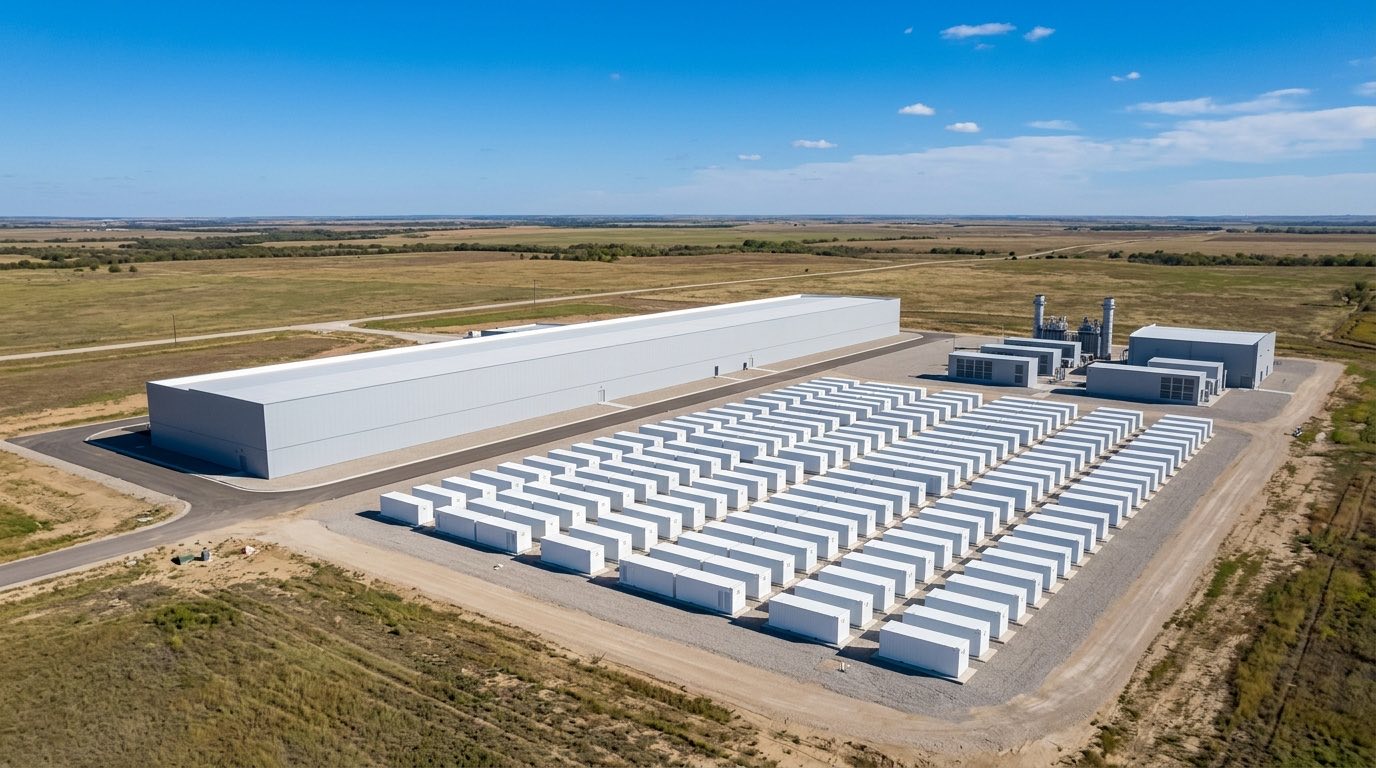
"AI data centres see repeated swings of server load of more than 50% of rated capacity within a second," the summary says. AI training and model use, unlike traditional data center operations, induce large and rapid power swings, which it says makes energy storage critical to a reliable supply. Its forecast is that around 20 GW to 25 GW of battery storage could be installed in data centers globally by 2030, "potentially making them a grid asset if the incentives are right."
That second is where the computing side meets the power side.
A Scramble Across the Value Chain
A scramble for electricity, grid connections, manufacturing capacity, chips and capital has set in across the AI value chain, the summary says. Among the limits inside the IT industry it notes a shortage of high-bandwidth memory, which it calls integral to AI chip production. That shortage, as of the report, "has developed over the past six months and is anticipated to persist through at least the end of 2027."
The agency's updated projections have data center electricity consumption roughly doubling, from 485 TWh in 2025 to a projected 950 TWh in 2030, around 3% of global electricity demand by that date. The bottlenecks, it says, "are reducing the likelihood of more aggressive near-term scenarios, despite booming investment and surging project pipelines." Further out, its outlook for data center demand sees a possible upside.
Gas on the Site
Held back by slow grid connections, developers in the United States are pushing forward projects with onsite natural gas-based power generation, the summary says. Satellite tracking of these projects, it says, "indicates that around one-fifth have started land clearing or construction." It calls onsite gas power an emerging solution, "with key design, supply chain, regulatory and financial questions remaining."
New analysis by the agency, the summary says, shows that reliable onsite gas-fired electricity for "critical and variable data centre load" requires overbuilding onsite generation infrastructure by 30% to 70% relative to demand.
The overbuild is the price of firm power from a plant on the site. The summary sizes it. It does not say who carries the cost of the machines that stand ready.
In the context of a supply crunch for gas turbines, the summary says, "it is not clear that onsite generation necessarily promises a faster route to market for data centres at scale." Its forecast, "though uncertainties are high," is that around 15 GW to 27 GW of onsite natural gas may power data centers by 2030, mostly in the United States.
"However, this does not remove the urgency of addressing grid bottlenecks, as most data centres prefer connecting to the grid."
Sources
- International Energy Agency (IEA). Key Questions on Energy and AI: Executive summary. 2026. energy agency