"Several companies and States recently contacted the U.S. Environmental Protection Agency (EPA) requesting clarity on certain regulatory provisions in the Acid Rain Program (ARP)," begins a memorandum dated July 16, 2026. Their questions were about what it calls "islanded" power generation facilities, plants with no link to the grid. The memorandum comes from EPA's Office of Air and Radiation and is addressed to the agency's regional administrators. The program it concerns, set up under the 1990 Clean Air Act Amendments, "requires emission reductions of sulfur dioxide and nitrogen oxides from the power sector." Parts of the memorandum follow, not the whole.
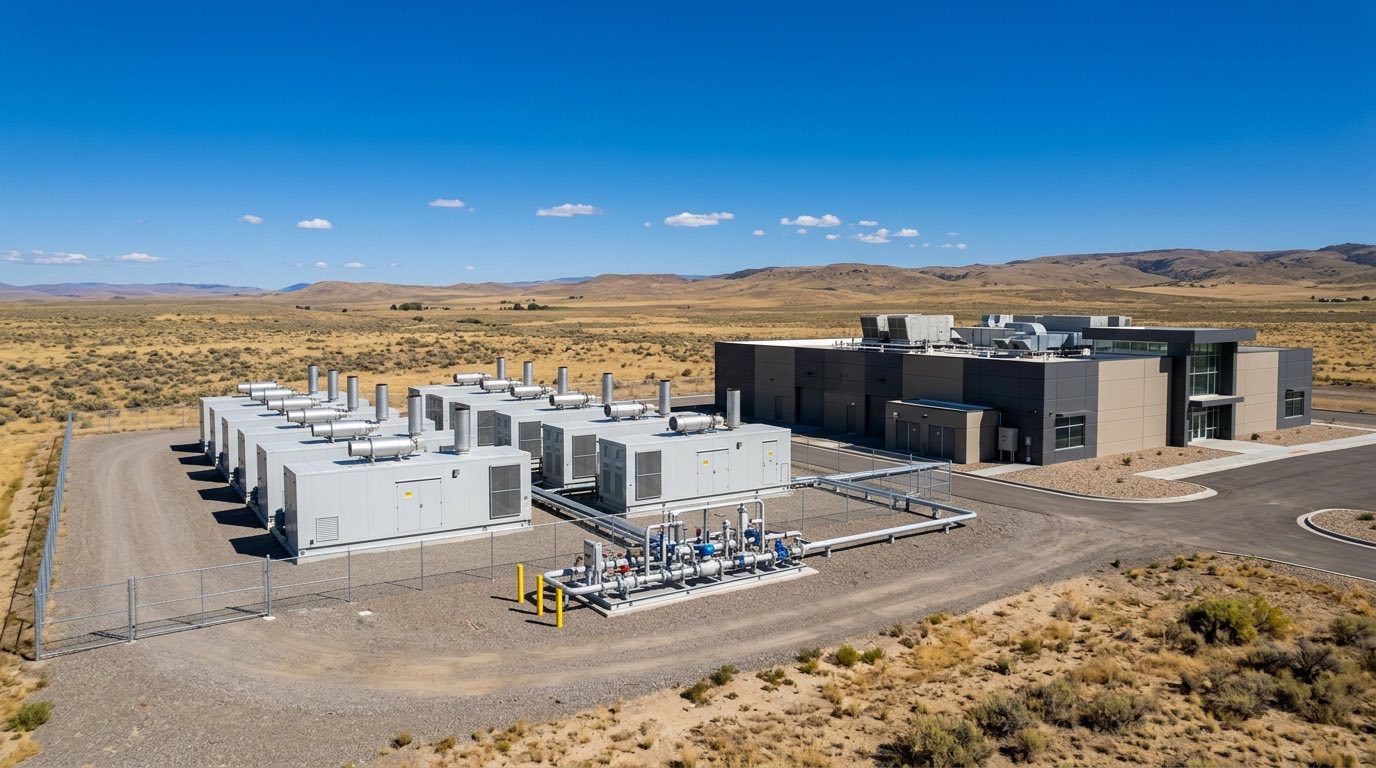
The memorandum gives one company's case as its example. That company asked about a planned facility "consisting of approximately 500 megawatts (MW) of simple cycle natural gas-fired combustion turbines and reciprocating engines to exclusively power an adjacent, third-party owned data center." The plant would be islanded, "which means the facility has no physical connection to the utility grid."
How EPA Reads the Rules
In general, the program "applies to fossil fuel-fired combustion devices owned or operated by a utility that serves a generator that produces electricity for sale." In EPA's regulations a utility is "any person that sells electricity," and a generator is a device that produces electricity and was or would have been required to be reported as a generating unit on a Department of Energy form, DOE Form 860, in its 1990 edition. That form defines an electric utility as an entity that owns or operates facilities "for the generation, transmissions, distribution, or sale of electric energy primarily for use by the public."
"The EPA believes that, considering the plain text of these definitions, the ARP does not apply to power generation facilities that are not connected in any way to the larger electricity grid." Form 860 of 1990, the memorandum says, only covers generators who sell electricity "primary for use by the public," and "The EPA understands this language to necessitate grid connection." So a facility that generates electricity only for a private consumer's use, with no grid connection, falls outside the form's reporting requirement, in EPA's reading.
If It Connects Later
"If a company develops a power generation facility that is not grid connected, but at a future date the company does connect the facility to the grid, the facility may be subject to the provisions in the ARP." Among other things, the memorandum says, such companies "should bear in mind the ARP permitting requirements found in 40 CFR Part 72 in their planning." It does not address the specifics of such a case, among them other possible grounds for exclusion or exemption, such as those available to cogeneration facilities or solid waste combustors.
A plant built islanded has a reason to stay islanded. If the campus later wants the grid, as a backup or a buyer, the memorandum says the program may follow, and its own advice is to plan for that.
What It Does Not Decide
EPA "does not intend this memorandum to provide any final determination or Agency action concerning ARP applicability for any particular facility," and it "does not address all scenarios in which the regulatory provisions at issue may apply." Nor does it address the applicability of "any other statutory provisions, regulations, or programs under the CAA," the Clean Air Act.
Permitting under the program, EPA notes, is generally carried out by State air agencies under approved programs, and sources are advised to consult them, "as States’ ARP permitting regulations may vary in certain respects from Federal requirements."
The memorandum speaks to one program and leaves the rest of the Clean Air Act open. For a campus plant, the permit that sets the schedule may be one this memorandum does not address.
Because the memorandum makes no final determination for any specific source, EPA "does not intend for this memorandum to constitute final agency action."
Sources
- U.S. Environmental Protection Agency. Memorandum: Clarification of Acid Rain Program Regulatory Provisions Concerning Islanded Power Generation Facilities. 16 July 2026. regulator