AI training loads
-
Behind the meter Building and running the plant
The IEA Says It Is Not Clear That Onsite Generation Necessarily Promises Data Centers a Faster Route to Market at Scale, in the Context of a Supply Crunch for Gas Turbines
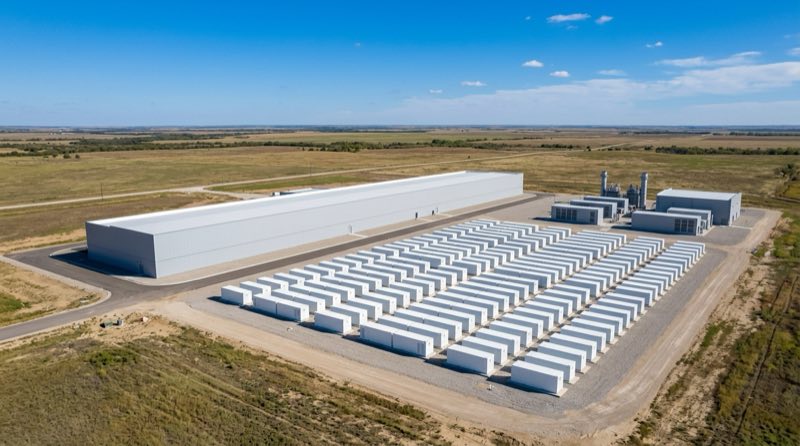
The IEA's executive summary says reliable onsite gas-fired power for "critical and variable data centre load" requires overbuilding onsite generation relative to demand, and that, with a supply crunch for gas turbines, "it is not clear that onsite generation necessarily promises a faster route to market for data centres at scale."
-
Pacific Northwest National Laboratory Says Phasor Measurements Can Understate Higher-Frequency Oscillations from AI Training Data Centers
The laboratory's report says artificial intelligence training data centers "with periodic load profiles can induce sustained grid oscillations across a wide frequency range," and that "the filtering inherent in the phasor estimation process can significantly attenuate oscillation magnitudes."
-
Not Well Documented: Berkeley Lab's 2025 Update on United States Data Center Energy Use
Lawrence Berkeley National Laboratory's update of June 2026 estimates how much electricity data centers in the United States use, and could use by 2030. On how much of its grid connection a data center uses, it says the share "is not well documented."
-
Rapid Fluctuations in Active Power Consumption: Large Loads in ERCOT's Board Update of September 2026
ERCOT told its board in September 2026 that large loads, "particularly those associated with data center AI training processes, are capable of producing rapid fluctuations in active power consumption," and that its draft NOGRR "will recommend" a limit on that variation.
-
Prior to Receiving a Request: NERC's Level 3 Alert on Computational Loads
On May 4, 2026, NERC sent the grid's planners, owners and operators a Level 3 alert on computational loads such as AI training, with seven essential actions and questions to answer by August 3. The alert says it "does not create a mandatory obligation to take the Essential Actions."
-
Design and construction Chips, racks and cooling
Below the Rated Power, in a Simulation: A National Laboratory Measures the Power Drawn by AI Jobs
A paper whose authors give the National Laboratory of the Rockies as their address, stamped April 8, 2026, measures the power drawn by AI training, fine-tuning and inference jobs on a specific hardware setup, and scales the measurements up to two simulated data centers. In both, peak power stayed below the rated design. The paper lists its own limitations.
-
Training and Saving Checkpoint Progress: NERC's White Paper on Emerging Large Loads
A white paper of NERC's Large Loads Task Force, dated July 2025, sets out the characteristics and risks of emerging large loads. It says that, generally, AI training executed in large clusters has rapid fluctuations during training periods and while saving checkpoint progress, and that the rapid ramps seen in those cycles are not observed in current AI inference methods.