ERCOT, the Electric Reliability Council of Texas, put an Interconnection and Grid Analysis Update before its Board of Directors at the meeting of September 14 and 15, 2026. The deck runs to six slides and is marked "For information only," with no action requested. Its first slide points to a separate presentation, Item 14, for information on large load interconnection. Parts of the deck follow, not the whole.
Swings in Active Power
The deck's last slide is headed "Draft NOGRR: Large Load MW Variation Challenges." "Large Loads, particularly those associated with data center AI training processes, are capable of producing rapid fluctuations in active power consumption," it says. "These variations can induce perturbations on synchronous generator shafts and potentially result in equipment fatigue or damage."
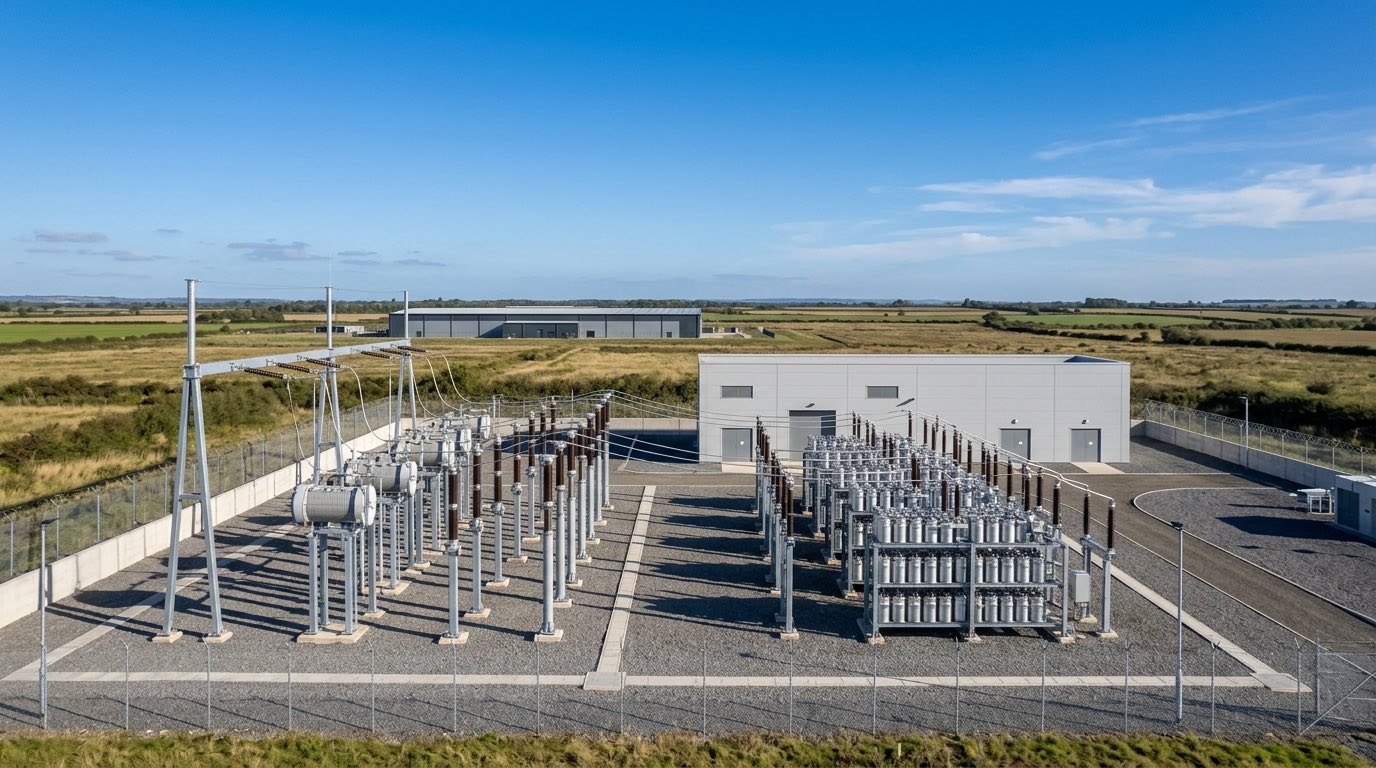
The slide says that "Several industry events and actual load profiles have highlighted this concern," and that since July 2025 ERCOT "collaborated with industry experts and engaged stakeholders to investigate these risks." The charts and the photograph on that slide are not reported here.
Ride-Through and Models
The slide before it sets out three risks that ERCOT sees in large loads, each with a mitigation and a status. On ride-through, "Sensitive compute equipment trips offline during normal grid events, leading to grid imbalance and instability." The mitigation, NOGRR 282 and NPRR 1308, is to "Implement ride-through requirements for Large Computational Loads," and the status is that "The PUCT approved NOGRR 282/ NPRR 1308 in July, effective on August 1."
On modeling, "Dynamic models for Large Loads have proven to be inaccurate and thus are inadequate for studying their grid impacts." ERCOT is working with Texas A&M University on more accurate models, and Texas A&M, the slide says, has released a new model for crypto mining facilities and is working on one for data centers. PGRR 144 introduces model quality requirements for large loads, and "TAC endorsed PGRR 144 in August and is up for Board consideration in September."
Large Load MW Variation Requirements
The remaining risk on that slide is oscillation: "Certain data centers processes can oscillate in a way that damages grid equipment." Its mitigation is a draft NOGRR that "Ensures Large Load processes do not oscillate in a manner that would cause grid damage," and its status is that "ERCOT plans to submit NOGRR in September or October."
The last slide gives the number. ERCOT's draft NOGRR, Large Load MW Variation Requirements, "will recommend a limit of 10 MW per 5 seconds for power variation in Large Loads." The proposal, the deck says, "aims to manage reliability risks while facilitating Resource and Large Load interconnections." It calls continuous monitoring and enhanced situational awareness essential as well, and says that "Additional NOGRRs may be submitted to strengthen monitoring requirements."
A draft that will recommend a limit is not yet a limit.
Sources
- Electric Reliability Council of Texas (ERCOT). Item 10: Interconnection and Grid Analysis Update (Board of Directors meeting of 14 and 15 September 2026, revised). 15 September 2026. grid operator