The U.S. Environmental Protection Agency's fact sheet, "Use of Backup Generators to Maintain the Reliability of the Electric Grid," opens its introduction with the date May 1, 2025. It describes provisions of EPA's emission standards for stationary engines, and gives an example of their use. Parts of it follow, not the whole.
The fact sheet places those provisions inside an agency initiative. It says they help to achieve two of the initiative's pillars, one of them to "Make the United States the Artificial Intelligence Capital of the World." Its introduction says "Significant load growth is expected from increased demand from manufacturing and data centers," and that demand response programs can reduce the need to construct new generation by lowering the peak grid demand for energy. The importance of using backup generators powered by stationary reciprocating internal combustion engines, RICE, as a resource to maintain the reliability of the electric grid "will likely increase in the coming years due to the forecasted significant load growth."
Non-Emergency Hours, Under Conditions
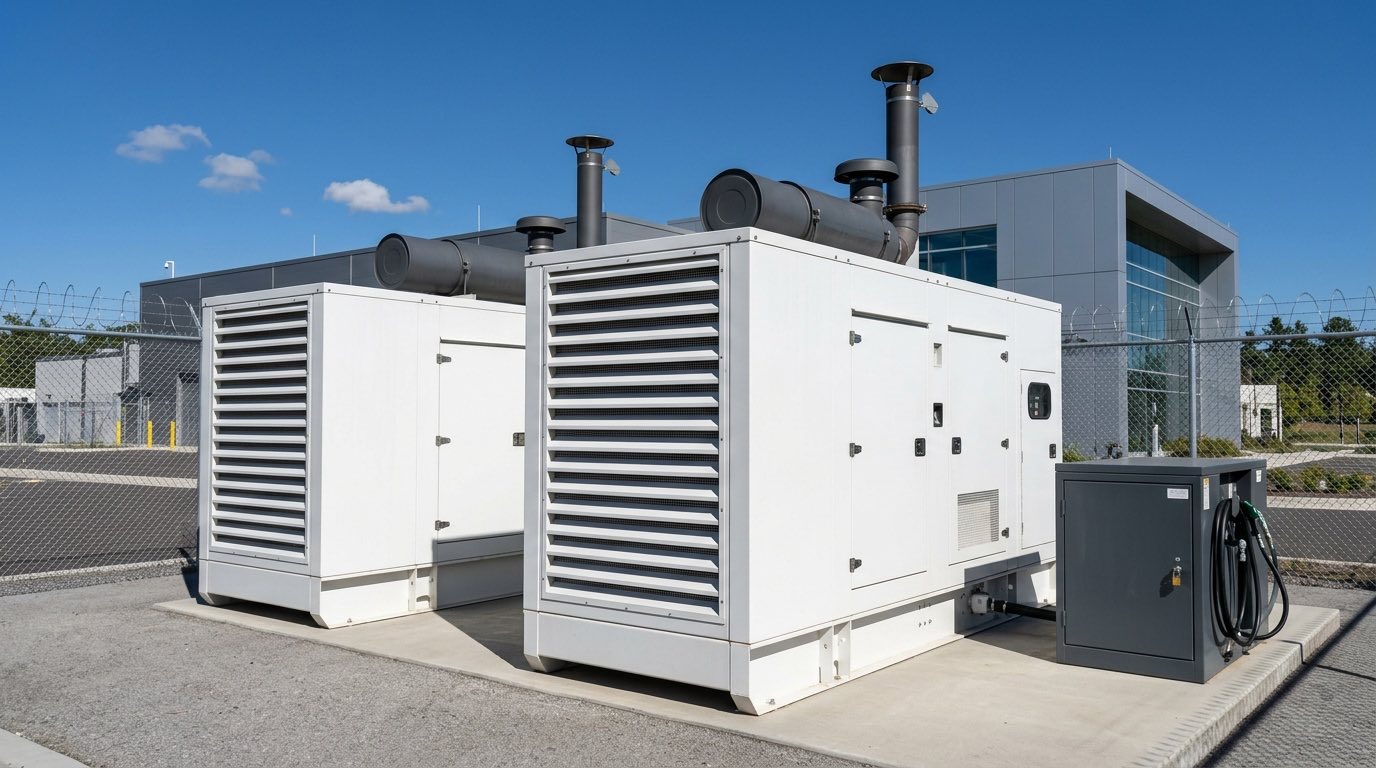
EPA's standards include provisions specifying situations under which emergency engines can be operated "for up to 50 hours per year" to prevent the interruption of power supply in a local area. Specifically, they "state that emergency engines can operate for up to 50 hours per year in non-emergency situations to supply power as part of a financial arrangement with another entity if all of the following conditions are met:"
- "The engine is dispatched by the local balancing authority or local transmission and distribution system operator."
- "The dispatch is intended to mitigate local transmission and/or distribution limitations so as to avert potential voltage collapse or line overloads that could lead to the interruption of power supply in a local area or region."
- "The dispatch follows reliability, emergency operation, or similar protocols that follow specific North American Electric Reliability Corporation (NERC), regional, state, public utility commission or local standards or guidelines."
- "The power is provided only to the facility itself or to support the local transmission and distribution system."
- "The owner or operator identifies and records the entity that dispatches the engine and the specific NERC, regional, state, public utility commission, or local standards or guidelines that are being followed for dispatching the engine. The local balancing authority or local transmission and distribution system operator may keep these records on behalf of the engine owner or operator."
A footnote cites the rules and adds that "the subpart ZZZZ requirements only apply to engines located at area sources of hazardous air pollutants."
Under these conditions the engine runs when the local balancing authority or system operator dispatches it. A campus that enrolls its backup engines hands part of their hours to someone else's call.
An Example
The fact sheet's example of how "the 50-hour provisions could be used to maintain electric reliability" is a regulatory interpretation that a utility requested. The interpretation, it says, shows how a local balancing authority or local transmission and distribution system operator could use backup generators to maintain electric reliability in accordance with these provisions. The utility stated that its demand response program serves an important role in maintaining reliability during this time of "significant new and expanding load from manufacturing, electric transportation, data centers, and advanced cloud computing and blockchain operations."
In the fact sheet's account, the utility, as the local balancing authority, is able to dispatch generators enrolled in the program to mitigate imminent local energy emergencies and limitations on local transmission and/or distribution reliability equipment, "to avert voltage collapse and power supply interruptions." That, the fact sheet says, "prevents the need for rotating load shed," which would create local disturbances that could result in the use of all generators in an affected area. The letter granting the interpretation is not part of the fact sheet, and it is not reported here.
Whether a campus's own engines can serve that way, and for how many hours, is a question for its permits and its utility before it is a resource anyone can count on.
Sources
- U.S. Environmental Protection Agency. Fact Sheet and Frequently Asked Questions: Use of Backup Generators to Maintain the Reliability of the Electric Grid. 1 May 2025. regulator