On May 11, 2026, the U.S. Environmental Protection Agency, EPA, issued a proposal to clarify when construction begins under one of its air permitting programs. That program, New Source Review, NSR, requires certain stationary sources to obtain a permit before they begin construction. It covers new construction and changes to existing sources alike. The release says one point has been unclear from the start. "Since the program's inception, there has been ambiguity regarding what types of construction are permissible before obtaining a permit."
What could be built first
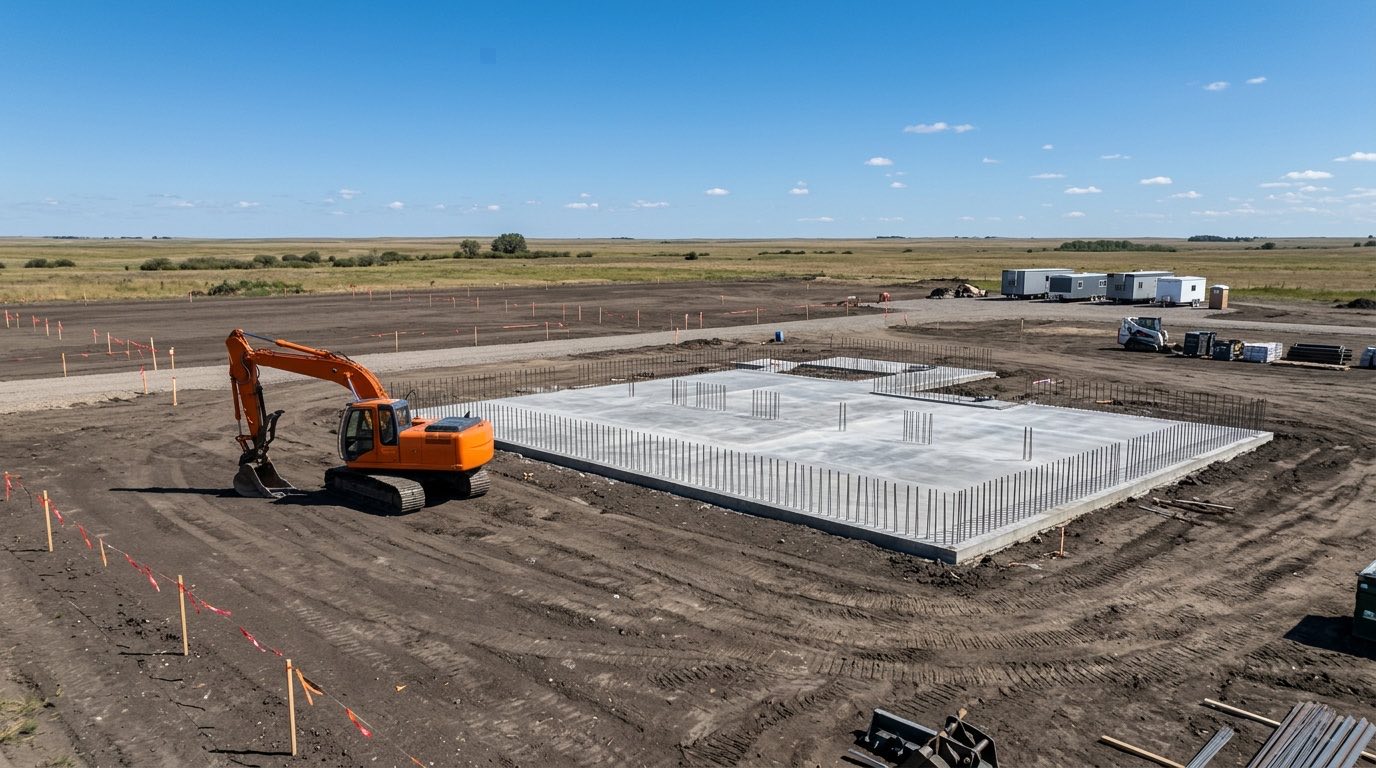
What the proposal would let come first is what the release calls "non-emitting components or structures." Its examples are "certain cement pads and wiring, piping, and associated support structures," and the proposal would "bring flexibility" to building them.
To get there, EPA is proposing to revise its definition of Begin Actual Construction and to add a new definition of pollutant-emitting activities. If finalized, the rule "will codify how permitting authorities distinguish between stationary sources and non-emitting components or structures."
Power and data centers are named among the uses. "If finalized as proposed," Americans will be able to start building non-emitting components or structures "for essential power generation, data centers, and manufacturing prior to obtaining a major New Source Review (NSR) permit."
The proposal does not move the permit. It moves some of the work in front of it, and only the parts the rule would treat as non-emitting.
EPA's reasons, in its own words
EPA makes its case as a judgment of its own rule. For years, the release says, the definition "has imposed constraints on economic development and American ingenuity by slowing down parts of construction projects that pose no impact to human health or the environment." That is the agency speaking about its own definition.
It links the change to AI as well. The change "will support the development of Artificial Intelligence (AI) infrastructure and power generation." Under its background heading, the release adds that in 2025 EPA "launched a website to provide a central location for those looking to learn more about CAA regulations, guidance, and technical tools that can assist with modeling, air quality permitting, and regulatory interpretations relevant for data centers and AI facilities."
If finalized
The release states what the rule would do "if finalized," and it does not set out the proposed definition itself. On what comes next, it says that "EPA will hold a 45-day comment period on this proposal."
That leaves a direction and no date for a final rule. A developer who plans early work on a site around it is planning around a proposal, which may change before it is final.
Sources
- U.S. Environmental Protection Agency. EPA Proposes Redefining "Begin Actual Construction" to Remove Unnecessary Impediments to Building and Advance Economic Progress (news release). 11 May 2026. regulator