On February 25, 2026, the U.S. Energy Information Administration, EIA, published a short note in its Today in Energy series on the natural gas pipelines completed in the United States in 2025. It draws on EIA's own Natural Gas Pipeline Projects Tracker. It says where the new capacity carries gas, and how much of it is intrastate pipe, outside the jurisdiction of the federal energy regulator.
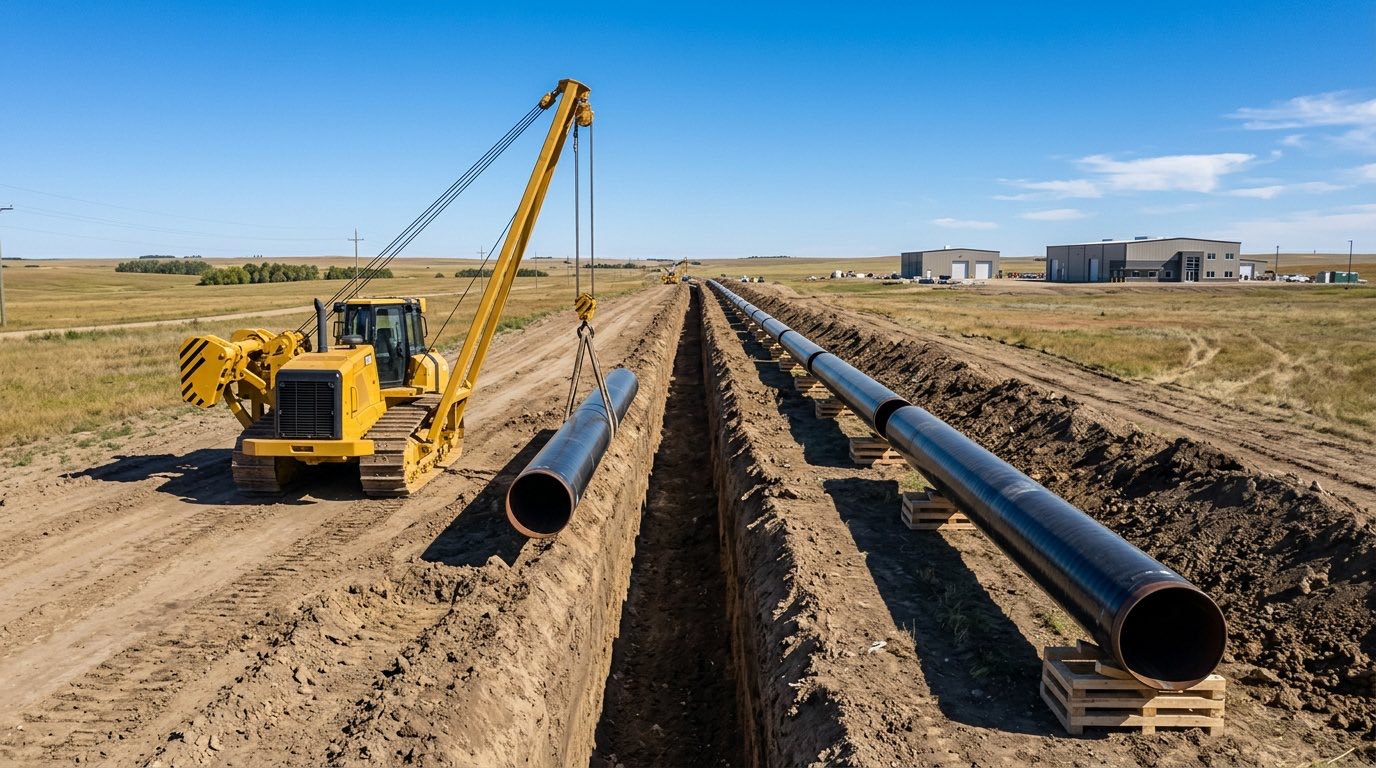
Where the new pipe goes
The year's projects "increased capacity by approximately 6.3 billion cubic feet per day (Bcf/d)," EIA says. Most of it is meant for one region. "A substantial portion, 85%, or 5.3 Bcf/d, of this new capacity is dedicated to delivering natural gas to the South Central region of the United States."
That region takes in the Gulf Coast, "where much of the nation's growing natural gas demand, particularly from liquefied natural gas (LNG), is concentrated." The new capacity, EIA adds, "primarily connects both new and existing supply sources to consumers in the region."
Primarily within state lines
Most of it is also intrastate pipe. "Approximately 65% of the total pipeline capacity built in 2025 consists of intrastate pipelines," the note says, "continuing the recent trend of intrastate pipeline builds outpacing interstate capacity additions." Such pipelines "operate primarily within state lines and are therefore not subject to the jurisdiction of the Federal Energy Regulatory Commission (FERC)." Primarily, in EIA's word.
The note puts most of the year's new capacity outside FERC's jurisdiction. For a plant that needs gas, that bears on which approvals its pipe waits on, and the note does not take that question up.
Much of this pipe does a particular job. The new intrastate capacity "largely functions as gathering systems, which are essential for transporting natural gas from producers into the wider transmission system." Two such projects completed in 2025 "expanded pipeline capacity by a combined 3.5 Bcf/d to connect natural gas production from the natural gas-producing Haynesville formation" to a hub in southeastern Louisiana. Both "were in service as of October 2025."
Gas for the Gulf Coast
"In addition, three major projects expanded natural gas pipeline capacity for delivery to growing demand centers on the Gulf Coast by a combined 1.8 Bcf/d." Two of them, EIA says, deliver gas directly to an LNG facility "which shipped its first cargo in 2025." The third "added 0.4 Bcf/d in interstate capacity from Texas through to eastern Louisiana."
The note counts where the year's new pipe went and finds most of it bound for the South Central region, with its LNG demand. It does not mention power plants or data centers, so a developer of either learns where the pipe went in 2025, and not whether new pipe will reach a new plant.
Sources
- U.S. Energy Information Administration. Most natural gas pipelines built in 2025 connect the South Central United States to supply (Today in Energy, in-brief analysis). 25 February 2026. energy agency