The U.S. Department of Energy owns or manages land across the United States, and in a request for information signed in Washington on March 21, 2025, it asked who would want to put AI infrastructure on some of it. The request seeks to assess industry interest in developing, operating and maintaining AI infrastructure on select land the department owns or manages. It gives its aim with dates. DOE "seeks to enable the construction of AI infrastructure at select DOE sites to begin by the end of 2025, with a target of commencing operation by the end of 2027." Responses were requested within 30 days of the request's publication in the Federal Register. Parts of the request follow, not the whole.
What It Covers
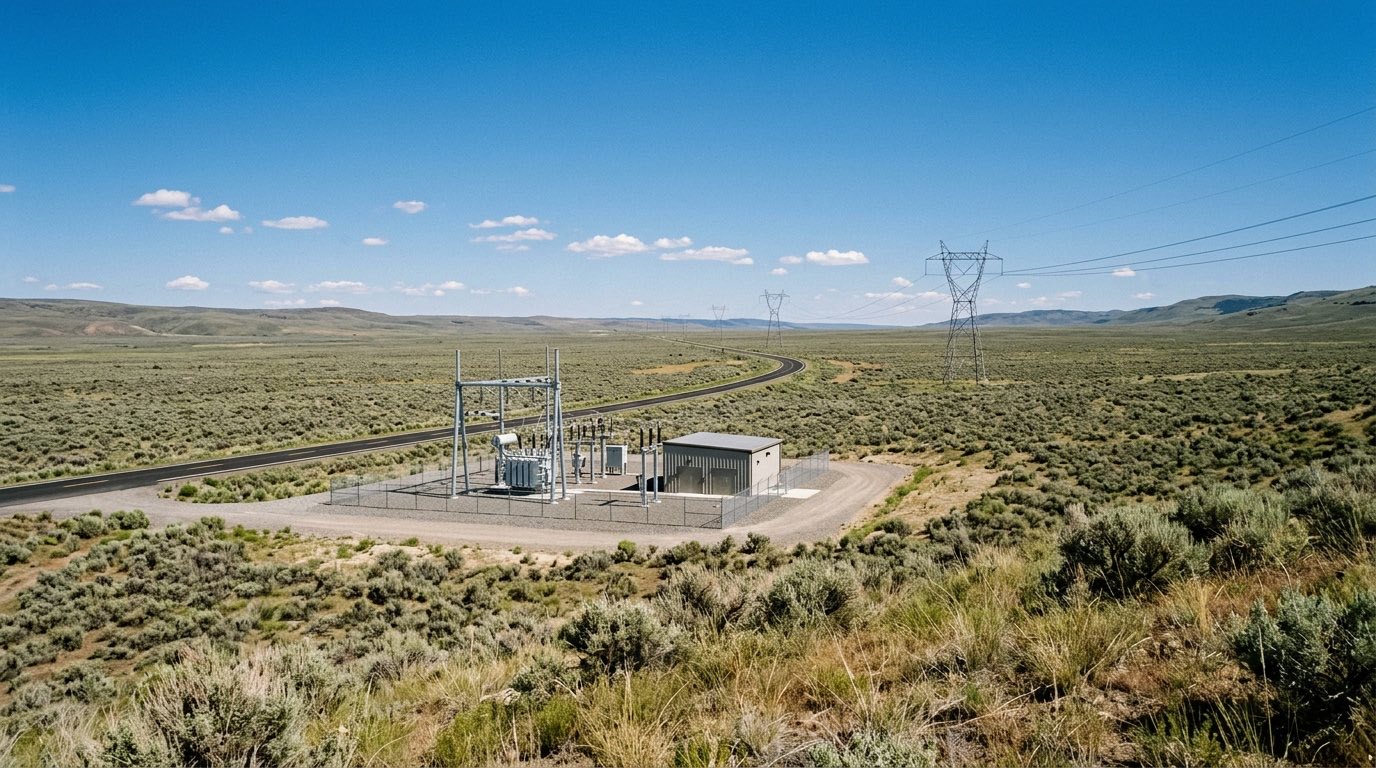
For the request's purposes, AI infrastructure "includes AI data centers, which contain specialized Information Technology (IT) equipment and associated cooling facilities, as well as their energy supply, including sources of generation, such as nuclear energy, and transmission and storage." Generation, transmission and storage sit inside the term.
DOE says it wants to hear from those with experience in developing, operating and managing AI infrastructure, and also from grid operators, technology developers, the public and potentially affected entities. The government, it says, anticipates authorizing land use through either "a long-term Ground Lease or an Easement." What it learns "may be considered in developing a public solicitation of private-sector proposals for AI infrastructure construction, operation, maintenance, and decommissioning on federal land." The request itself "does not constitute a solicitation."
Sites in No Particular Order
DOE has identified locations at 16 sites it owns or manages "that could be amenable to hosting AI infrastructure," the request says, and it lists them "in no particular order." Among them are national laboratories, such as Idaho, Oak Ridge and Los Alamos, and two gaseous diffusion plants built to produce enriched uranium. Appendices give public information on each.
The appendices for those two give power and water. The Paducah site, its appendix says, "is designed for up to 3GW in the Midcontinent Independent System Operator (MISO) power market, and 30 million gal/day of water," and covers 3,556 acres, with ongoing remediation for potential development of a data center. The Portsmouth site "is designed for 2.2GW in the PJM Interconnection power market and 40 million gal/day of water."
"The listed sites in this RFI are not comprehensive of sites under consideration by DOE. DOE has not made any preliminary or final decisions as to changes to land use or designation relating to those sites or others." In potential future solicitations, DOE would aim to provide more on each site, power access, energy infrastructure and access to water among it.
Possible Terms
The terms are written as possibilities. A realty agreement, the request says, "could include requirements" that the non-federal parties agree to bear all responsibility for the costs and liabilities of building and operating the AI data centers and the other infrastructure upgrades needed to support them, "including costs to transmission providers or transmission organizations necessary to support the data centers." In-kind contributions may count toward those costs. And DOE "anticipates that the AI infrastructure developer would be responsible for ensuring compliance with state and local requirements governing electricity, including interconnection requirements."
The Questions It Asks
The questions come in numbered categories, and respondents "can choose to answer as many or as few questions as they feel appropriate." On the site, DOE asks what water and sewer availability is needed and whether that varies by cooling technology, and what technologies "would enable data centers to be sited in locations with hot humid weather where little water is available." On power at the site, it asks which "co-located energy technologies are of highest interest in being developed with AI data centers."
On power from outside the site, it asks for desired timelines for electricity capacity, "Assuming additional capacity could be procured or built in stages." It also asks, "Would flexible data center operations be possible if it would enable faster capacity interconnection?" And among its challenges, it asks what concerns exist "with supply chain limitations, such as long lead times on certain power and onsite energy equipment, and what alternatives should be considered?"
The trade it asks about, flexible operations for a faster connection, is one a developer has to price before answering. How much the campus can give up, and for how long, decides what that speed is worth.
In its disclaimer, the request says that "Responses to this notice are not offers and cannot be accepted by the Government to form a binding contract. DOE may choose to make available all, some, or none of the sites listed in Section III of this document in potential future solicitations." All, some, or none.
Sources
- U.S. Department of Energy, Office of Policy. Request for Information on Artificial Intelligence Infrastructure on DOE Lands. 21 March 2025. energy agency