The U.S. Energy Information Administration, EIA, keeps a monthly inventory of electric generators, and its note of August 7, 2026 uses it to count battery storage. The note appears in the agency's Today in Energy series under the label "In-brief analysis", headed "Battery storage capacity averaged 70% growth over the last three years." Parts of the note follow, not the whole.
What is in operation
The note opens on growth. "Utility-scale battery storage capacity in the United States increased significantly during the last three years, with an annual average growth rate of 70%." It then gives the total. "By the end of 2025, the U.S. power system had operational battery storage capacity of 43.6 gigawatts (GW)."
The first half of 2026 added to it. During those six months operators "added another 8.3 GW of battery storage capacity, reaching nearly 52 GW of nameplate battery storage capacity," the note says, citing the agency's Preliminary Monthly Electric Generator Inventory. Nearly, in the note's own word.
A rating in gigawatts says how much power a battery can give at once, not for how long. For a load that runs around the clock, the hours matter as much as the gigawatts, and the note gives none.
What is planned
The expected additions come from plans operators report to EIA, where they anticipate "bringing an additional 54 GW of battery storage capacity online over the next two and half years." By the same plans, 14 GW is expected in the second half of 2026, 26 GW in 2027 and 14 GW in 2028. For 2027 and 2028 the note says operators "currently plan" those additions.
A reported plan is an operator's intent, not a delivery. Further on, the note puts it in its own words for one facility, "If those plans materialize".
The largest units
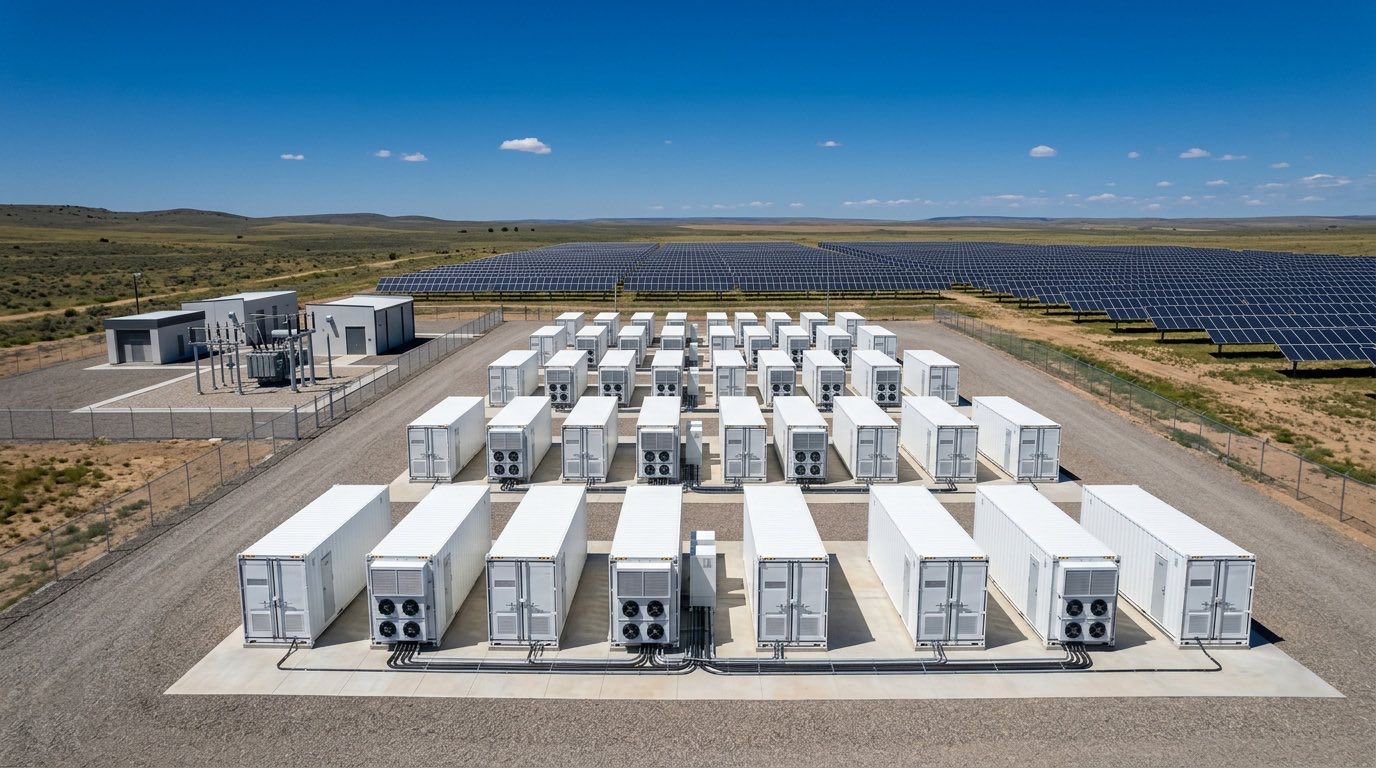
The largest batteries, the note says, sit at solar plants. "Solar photovoltaic (PV) plants host the largest battery storage capacity units." One facility, which "began operations in December 2025", "couples 500 megawatts (MW) of photovoltaic capacity with 500 MW of nameplate power storage for the California Independent System Operator (CAISO)." Its plans, the note says, call for "a doubling of the PV and storage capacity of the facility and for the new capacity to be operational by November this year." The note adds that "If those plans materialize, the facility will become the largest power storage facility in the United States."
The note's last paragraph is about prices. "Solar photovoltaic and storage facilities enable operators to store power when wholesale electricity prices are low and discharge electricity when prices are high, allowing power producers to capture larger profits." Low prices in, high prices out.
Sources
- U.S. Energy Information Administration. Battery storage capacity averaged 70% growth over the last three years (Today in Energy, in-brief analysis). 7 August 2026. energy agency