A growing share of new utility-scale solar capacity in the United States is co-located with battery storage. The U.S. Energy Information Administration, EIA, says so in a note dated October 30, 2026. Its figures come from data that operators report to the agency. Parts of the note follow, not the whole.
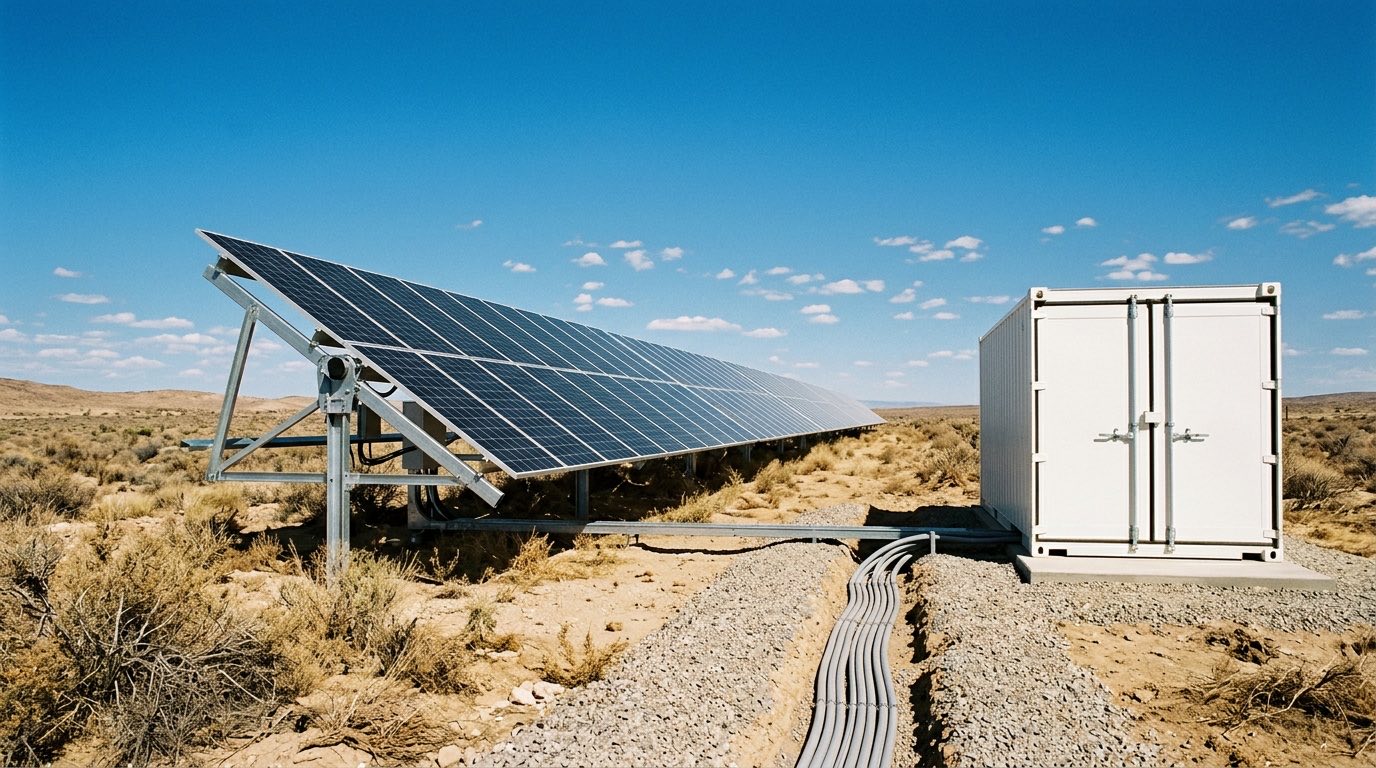
The Share, Added and Planned
Utility-scale solar developers are increasingly co-locating battery storage with new solar photovoltaic capacity, the note says. As of September 2026, over 16% of the new utility-scale solar capacity added this year is co-located with operable battery storage. In 2017 the share was 2%.
Operators also report their plans. Some solar additions are scheduled to come online in the last three months of the year. With them, the note says, the expected share for 2026 could increase to 19%. Longer-term plans indicate the trend will continue, it says. In plans submitted for 2027 and 2028, the expected portion is more than 30%.
How much of a plan reported to an agency gets built?
What Co-Location Lets an Operator Do
When operators co-locate battery storage with solar, the note says, they can direct solar electricity output to the grid or to the battery, depending on the wholesale prices. Wholesale prices in regions with large solar participation tend to fall when solar contributions are high and rise as they decrease, it says.
Plants with both solar and battery storage can manage their combined output, the note says. The aim is to maximize the value of their generating resources as wholesale prices change.
The National Share, the Southwest, and the Hours the Note Does Not Give
As of September, 13% of total utility-scale generating capacity in the United States is solar photovoltaic, the note says. Of that, 18% is co-located with battery storage.
Southwest states have higher levels of co-located solar and battery capacity, the note says. In California, Arizona, New Mexico and Nevada, the share of solar generation co-located with battery capacity is more than double the national average.
The note says nothing of how many hours the batteries can run.
For a load that runs around the clock, what counts is how long a battery can carry it. That is the number this note leaves out.
Sources
- U.S. Energy Information Administration. The share of solar generation with co-located battery storage is increasing (Today in Energy, in-brief analysis). 30 October 2026. energy agency