The North American Electric Reliability Corporation, NERC, keeps a Large Loads Action Plan. Its update for the third quarter of 2026 runs to three pages. Its subtitle speaks of actions "to Address an Emerging Risk."
On October 8, the update says, NERC's Board approved revisions to its Rules of Procedure. They establish two functional entity types, a Computational Load Owner and a Computational Load Operator, and associated registry criteria. NERC plans to file the approved criteria with the Federal Energy Regulatory Commission soon. Parts of the update follow, not the whole.
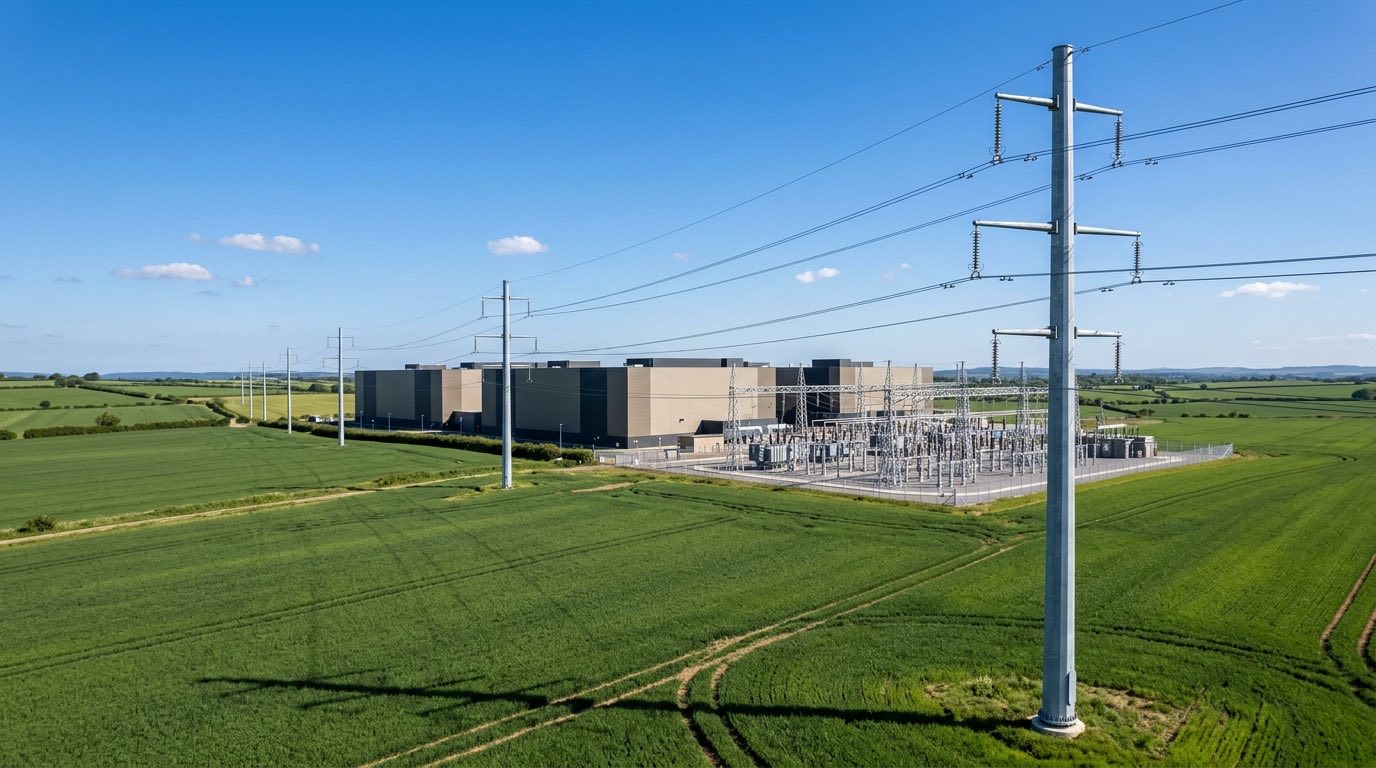
Owners, Operators and a Size Line
NERC posted draft registry criteria for initial comments on April 1, 2026. In response to comments on that proposal, the update says, NERC raised the minimum thresholds. The draft had set 20 MW of aggregated computational load at a point of interconnection of 60 kV and above. The revised criteria set 50 MW at 100 kV and above.
NERC also set a definition for computational load sites, among other refinements. The revised criteria went out for a second 30-day comment period, from August 19 to September 18. After considering stakeholder input and comments, the Board approved them.
The Board also authorized expedited procedures to develop a data request. It would support the registration of Computational Load Owners and Computational Load Operators, pending FERC approval of the proposed registry criteria.
For a campus built in phases, the question is when its aggregated computational load crosses that line, and who takes each role when it does.
What NERC Lists as Done
The update lists NERC's actions on large loads, quarter by quarter. In January 2026 it published an incident review on voltage-sensitive crypto load reductions. In May it published a reliability guideline on risk mitigation for large loads, and issued a Level 3 Alert for essential actions.
In August it posted "Large Load Disturbance Performance: Impact Analysis and Ride-Through Recommendations" for industry comments. In September it hosted a workshop on modeling data center loads.
The Standards and the Clock
NERC says the Computational Loads Reliability Standards draw on insights from its Level 3 Alert, its incident reviews and its Large Loads Working Group. It says they were developed on an accelerated timeline. They reflect collaboration among NERC and Regional Entity staff, the electric industry, and data center and cryptocurrency industry participants, among others.
The update says a final ballot period "will take place October 9 through the 14." The standards development process continues, it says, toward a planned filing in the fourth quarter of 2026.
The working group has also issued three Standard Authorization Requests. One covers disturbance performance for computational loads. Another covers studying the loss of computational load in planning and near-term reliability studies. A third covers event reporting, model validation and model quality assessment for these loads. Once comments are implemented on the last two, the update says, NERC's Reliability and Security Technical Committee and its Standards Committee will be able to endorse and accept them in December.
On July 16, FERC directed NERC to develop new or modified reliability standards on the risks of integrating computational loads into the bulk power system. It also directed NERC to revise its Rules of Procedure, including registry criteria for computational load entities. NERC says the order is directly in line with work already underway.
FERC has given NERC a deadline of December 31, 2026, to complete the standards and the rule revisions. An action plan on next steps for future standard changes is due in March 2027.
Sources
- North American Electric Reliability Corporation (NERC). Large Loads Action Plan: Q3 2026 Update. Q3 2026 (its own title; it prints no day). regulator