A utility in Louisiana asked its regulator, among other things, for approval to build, in the words of the Louisiana Public Service Commission's order, "the generation and transmission resources needed to serve significant new load associated with a data center." The matter was decided at the Commission's August 20, 2025 Business and Executive Session. The order approves a settlement.
Before the hearing began, the utility and the Commission's staff negotiated and executed a settlement dated July 2, 2025. The utility then settled with some of the intervenors, and those parties, with the utility and the staff, executed the Final Stipulated Settlement, with attachments, dated July 11, 2025. A contested hearing took place from July 15 through July 17, 2025, and on August 15 other intervenors filed an opposition to what their filing calls the "Contested Settlement." At the August 20 session, after "a question-and-answer session with ELL and the LPSC Staff and public comments being received," the Commission approved the settlement "by a vote of four commissioners in favor and one commissioner opposing."
The order uses its own short names. The utility is "ELL" or "the Company"; "the Customer" is the subsidiary through which a company is developing the data center; "ESA" is the Electric Service Agreement between the two; and "the Planned Generators" are three new combined cycle combustion turbine generators. Parts of the order and of the settlement attached to it follow, not the whole.
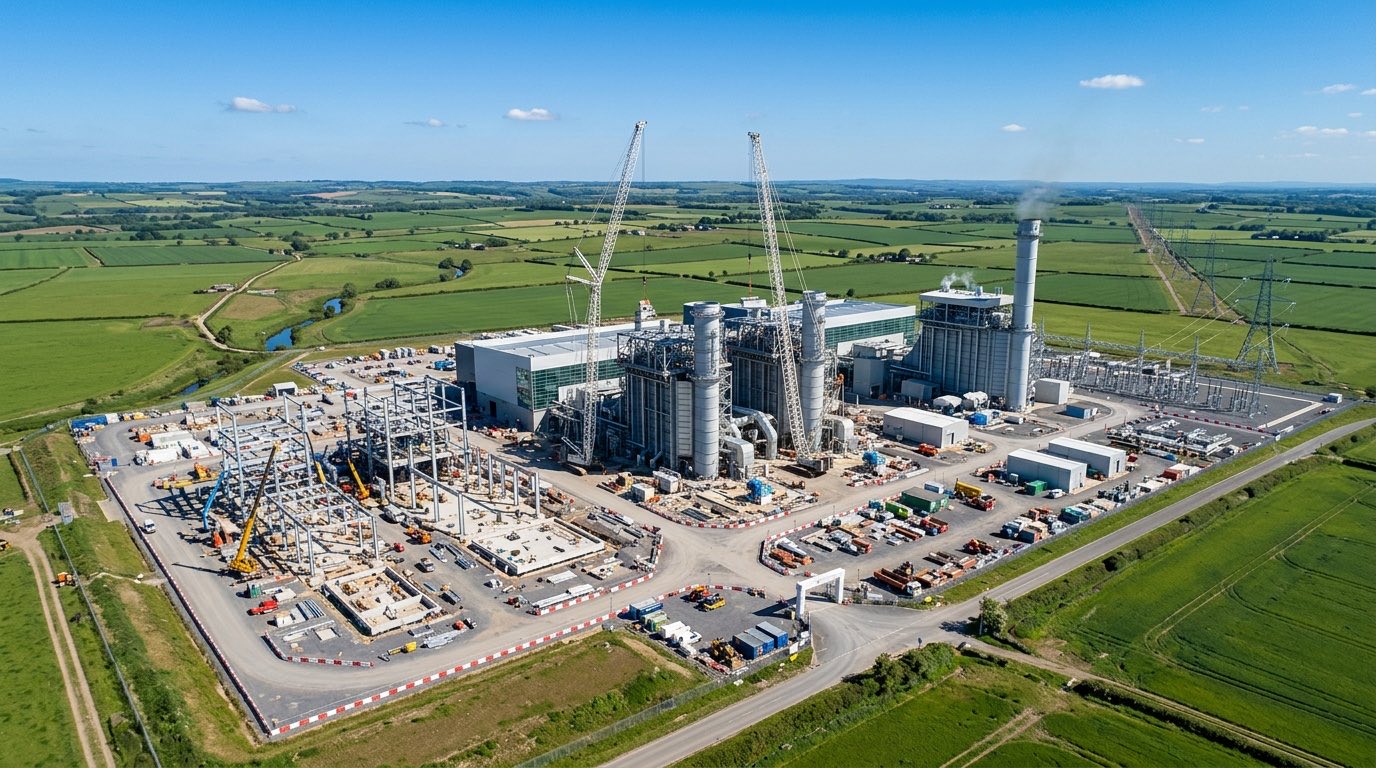
Three Generators, Found Prudent With Conditions
Two of the Planned Generators will be located near the Customer's site, the order says, and one at an existing site of the utility. Subject to certain Customer Protection Conditions in the settlement and to "the post-construction prudence reviews," the utility's construction of the Planned Generators "serves the public convenience and necessity and is in the public interest, and is therefore prudent." The settlement adds that "The Planned Generators are to be treated as system resources for all ELL customers."
The retail revenue requirement associated with the generators is "to be determined at the time each is proposed to be included in rates and subject to change in a prudence review of their actual costs." Once the actual construction costs are known, those costs and the utility's management of the construction "shall be subject to a Commission prudence review," and the utility "shall be entitled to a reasonable opportunity to recover the prudently incurred cost of constructing the Planned Generators."
The utility has "a continuing obligation to prudently manage the construction," and it will give the Commission's staff quarterly updates on its status, "including the schedule, costs, and other critical associated activities." "The first Monitoring Report shall be due nine months following the entry of an Order approving this settlement," the settlement says. Notwithstanding those reporting obligations, the utility "shall notify the Commission immediately when it is conclusively determined that total project or contract costs will exceed that stated in the application or the completion date for commercial operation is extended."
The Agreement With the Customer
The utility filed the ESA and other agreements, which the order calls the Related Agreements, with its application, to show the nature of the proposed relationship between the two and to give information on its proposed cost recovery. A footnote of the order says the Related Agreements include contribution in aid of construction agreements and parental guaranty agreements, among others.
The utility "did not seek approval of the ESA and Related Agreements," the settlement says, and the staff "explicitly is not expressing approval" of them or recommending that the Commission approve them. Nothing in the settlement or in the Commission's certification of the generators "is intended to be or should be construed as approval of the ESA and the Related Agreements or any of the terms contained therein."
Customer Protection Conditions
Among the settlement's Customer Protection Conditions, the utility will ensure that all parent guaranty agreements are obtained and fully executed, and will timely and prudently enforce its rights under them and under "other collateral security, including but not limited to the Credit Insurance." If the Customer terminates its ESA, the utility "will prudently seek to maximize the value of any excess capacity that may result from the termination." In the event of early termination, once it has received the Early Termination Fee, it will make a filing with the Commission for approval of how it proposes to use that fee.
During the original term of the ESA, the utility will give the Commission the Customer's renewal status before certain filings that seek a new resource whose need depends on the Customer's load continuing beyond that term. It will also inform the Commission of any disputes regarding, material modifications to or cancellation of the ESA or the Related Agreements.
The Grid Around the Load
The settlement also finds a set of new transmission facilities in the public interest, subject to the Customer Protection Conditions as well. The utility "will conduct appropriate analyses regarding the interplay between the Customer's Project and ELL's transmission system." Where material upgrades to the transmission system are required solely as a result of the Customer's project, their costs "will not be included in the rates of customers other than the Customer."
The utility will install power quality monitoring equipment on the substation serving the project. If the monitoring indicates substantial power quality concerns, "including the potential of torsional stress or violations of IEEE 2800," the settlement says those issues will be investigated, as they would be for any customer. And "Within ninety (90) days of an Order approving this settlement," the utility will file "the results of a study of the effect of losing the computing resources portion of the Customer's load and a plan for addressing any resulting transmission violations."
The study asks what the grid sees when the computing part of the load is lost. That is a question about how that load behaves as much as about the lines that feed it.
Sources
- Louisiana Public Service Commission. Order Number U-37425 (Docket No. U-37425, In re: Application for approval of generation and transmission resources in connection with service to a single customer for a project in North Louisiana). 20 August 2025. regulator