The Reserve Bank of Australia's Financial Stability Review of October 2026 carries a box titled "Funding the AI investment boom." The review says the data used to prepare it was cut off on September 24, 2026. The box opens on the point that "AI-related companies are increasingly using debt to fund large-scale projects, with the implication that investors in private and public markets are becoming more exposed to the sector."
Some of it is about power. Parts of the review follow, not the whole. The figures it takes from other firms are not reported here, and the companies its footnotes name are not named.
Where the Box Puts the Risk
In aggregate, the box says, "leverage is contained", and balance sheets generally remain healthy at present, though funding arrangements vary along what it calls the AI value chain. Large AI-related firms such as the hyperscalers are generally viewed as lower risk, it says, because they often have other revenue streams to support debt servicing.
The box also finds "pockets of higher-risk firms in the AI value chain", and gives as examples "data centre construction, utility and neocloud providers". These are firms whose customer bases are concentrated or whose balance sheets are weaker, and they face different financing constraints and options, the box says.
Data center construction is on that list.
Letters of Credit and Guarantees
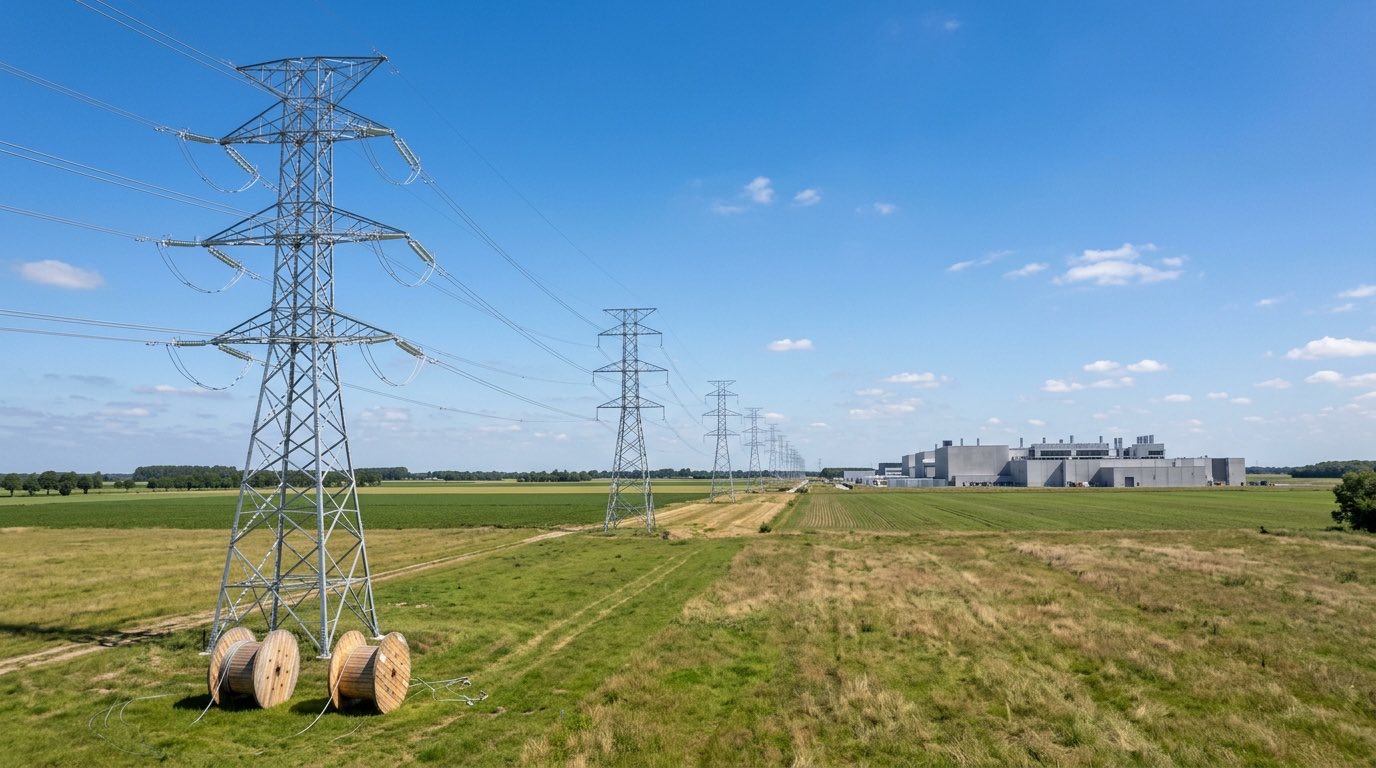
The box's next sentence is about power. "For example, to secure access to power, data centre developers are increasingly obtaining large bank-sponsored letters of credit that guarantee the costs of grid and generation upgrades required to connect new facilities." The sentence after it is about support from larger firms. Developers and neocloud providers that lack the balance sheet capacity to deliver large-scale AI infrastructure projects, it says, "can seek support from larger firms, such as residual-value or lease-payment guarantees, to facilitate the necessary funding."
These arrangements, the box says, "allow the investments to go ahead while limiting the risks borne by investors if projects are unsuccessful. However, they also create additional contingent exposures and further interconnect developers, lenders, infrastructure investors and hyperscalers through a common set of AI-related projects."
A letter of credit behind a grid upgrade puts a bank where computing meets power, standing behind the cost of connecting a new facility. The box does not say what becomes of that guarantee if the facility is late or its tenant leaves.
Mismatches and Locked-In Commitments
The box sets a condition. "If returns fall short of expectations, several features of the AI investment boom could potentially lead to losses among lenders and investors." One of them it calls "Debt maturity and asset-life mismatches." "Like other large infrastructure companies, hyperscalers have issued debt with longer maturities", the box says, including 20 to 30 years, "to finance their AI projects." That debt can finance capital expenditure on hardware with uncertain economic lives, such as chips and cooling systems, which the box says "may become obsolete as technologies advance rapidly, and substantially depreciate the value of the collateral before the debt matures."
Another it calls "Locked-in commitments for key inputs." The development and operation of AI-related infrastructure, the box says, requires a range of specialized hardware inputs and ongoing supplies of water and electricity. AI firms are increasingly signing long-term contracts that lock in access to hardware and resources for new data centers. The sector, it goes on, "is locking in extensive commitments amid considerable uncertainty about future AI demand, technological developments and energy requirements."
In Australia
The review's second chapter, on the resilience of Australian households and businesses, comes back to data centers at home. "While visibility is limited," it says, "available information suggests that Australian companies that operate data centres have so far mostly relied on both foreign and domestic debt rather than equity funding." The review then says that "Risks from data centre investments to the domestic financial system are limited to date."
Liaison, it says, suggests that Australian lenders have generally "remained quite attentive to risk" in their approach to lending for the construction of data centers. It adds that "the relatively high reliance on debt and rapidly growing size of this sector could introduce some vulnerability to the broader financial system over time (see Box: Funding the AI investment boom)."
Sources
- Reserve Bank of Australia. Financial Stability Review, October 2026. October 2026. central bank