In a note dated June 22, 2026, the Federal Reserve Bank of Minneapolis reports what construction firms in its district told its spring Construction Survey. The headline is "Construction activity softens under rising costs and uncertainty." Respondents, the note says, "painted a business environment more muted than vibrant." Data center work appears in it as one of the things that kept some firms busy. Parts of the note follow, not the whole.
Who Stayed Busy
More than half of respondents, 54 percent, reported lower activity in the six months ending in April 2026, and "roughly 1 in 5 businesses reported improved conditions." How well companies did depended on what kind of work they did. Firms that did most of their business in industrial, infrastructure and heavy construction projects "experienced the largest increases in activity."
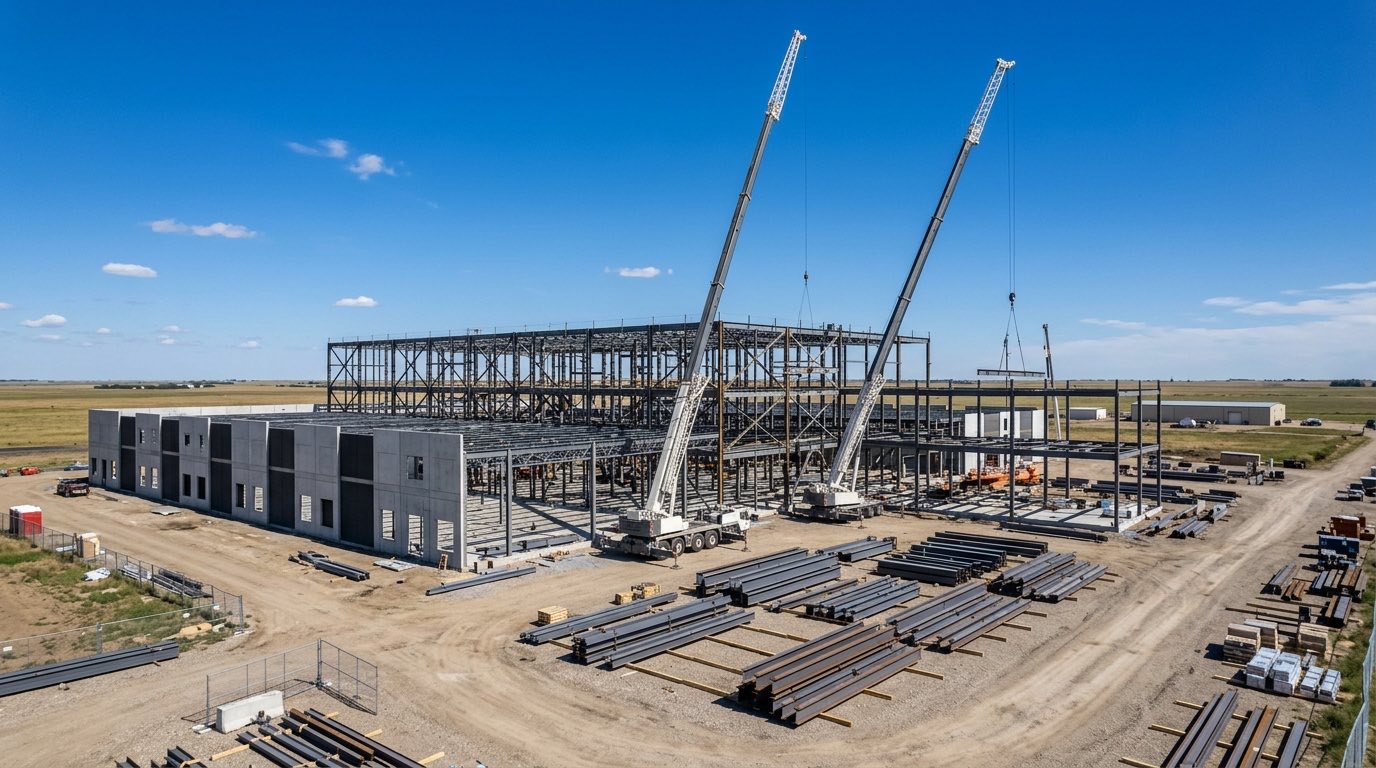
Some businesses "stayed busy with data center work, a higher number of industrial projects out for bid, and public infrastructure projects." The picture was different for residential and commercial construction companies, "which were the majority of survey respondents," and approximately "one-quarter of residential firms and about one-third of commercial businesses reported significant decreases."
"Pockets of strong activity were mostly in industrial and infrastructure projects," in the note's words. "But those were just a ray of light on an otherwise gloomy business landscape."
Busy is not the same as cheap. A contractor kept working by a data center job still buys materials and hires trades in the market the rest of this note describes.
Rising Costs, Scarcer Projects
New tariffs hit firms' operations last year. The note says those concerns remain, but now come second to the effects of the war in the Persian Gulf, among them higher costs and nervousness among clients.
Asked how input prices changed between November 2025 and April 2026 against the same period a year before, 90 percent of businesses reported increases. Price pressures "appeared to have deepened" in the two months ending in April, as rising oil prices drove up the cost of fuel and materials.
District construction firms, by the note's account, are "facing a difficult balancing act." They face rising costs for materials and other inputs, and to win new projects, "which are increasingly scarce, they must submit competitively priced proposals." As more projects were put on hold, the note says, the race to secure new ones intensified. "One in three respondents" named competition for available projects as "the most pressing challenge being faced by their business."
Scarce Skilled Labor
"Despite tough conditions for some," roughly "4 in 10 businesses" reported hiring more workers, adding hours for existing employees, or both, ahead of the busy season, and more than half "had open positions waiting to be filled, mostly for full-time work." In general, the note says, labor supply "remained steady," with about as many companies saying applicant availability had improved as saying it had worsened.
Skilled labor "remained scarce, even more so in rural parts of the district, where the number of younger people joining the trades can’t keep up with vacancies due to retirements." The "tug of war between construction companies for skilled labor," it says, "has been one of the contributors to recent wage increases."
By the survey's count, "Overall, 73 and 63 percent of employers reported increasing wages for skilled workers and laborers, respectively. Most increases exceeded 3 percent."
A contract priced before those raises, and before the input prices rose, leaves open who pays for them. The note cannot settle that. The contract has to.
A Net Negative Outlook
"About 3 out of 10 businesses" expected activity to increase over the next six months, but the overall outlook "remained net negative." Nearly "4 in 10 firms" expected business activity to decrease, and even many of those expecting it to remain flat "were already operating at reduced levels."
As energy prices have climbed at the start of the usually busy summer season, the note says, optimism "has headed in the other direction." The top challenge weighing on construction firms was "heightened competition for a reduced number of projects."
Sources
- Federal Reserve Bank of Minneapolis. Construction activity softens under rising costs and uncertainty. 22 June 2026. central bank