The Beige Book is, by its own account, "a Federal Reserve System publication about current economic conditions across the 12 Federal Reserve Districts." It is built from "a variety of mostly qualitative information, gathered directly from each District's sources," and it "is not a commentary on the views of Federal Reserve officials." Its contacts, it says, are not chosen at random. The Reserve Banks "strive to curate a diverse set of sources that can provide accurate and objective information about a broad range of economic activities." The July 2026 edition rests on information collected "on or before July 6, 2026."
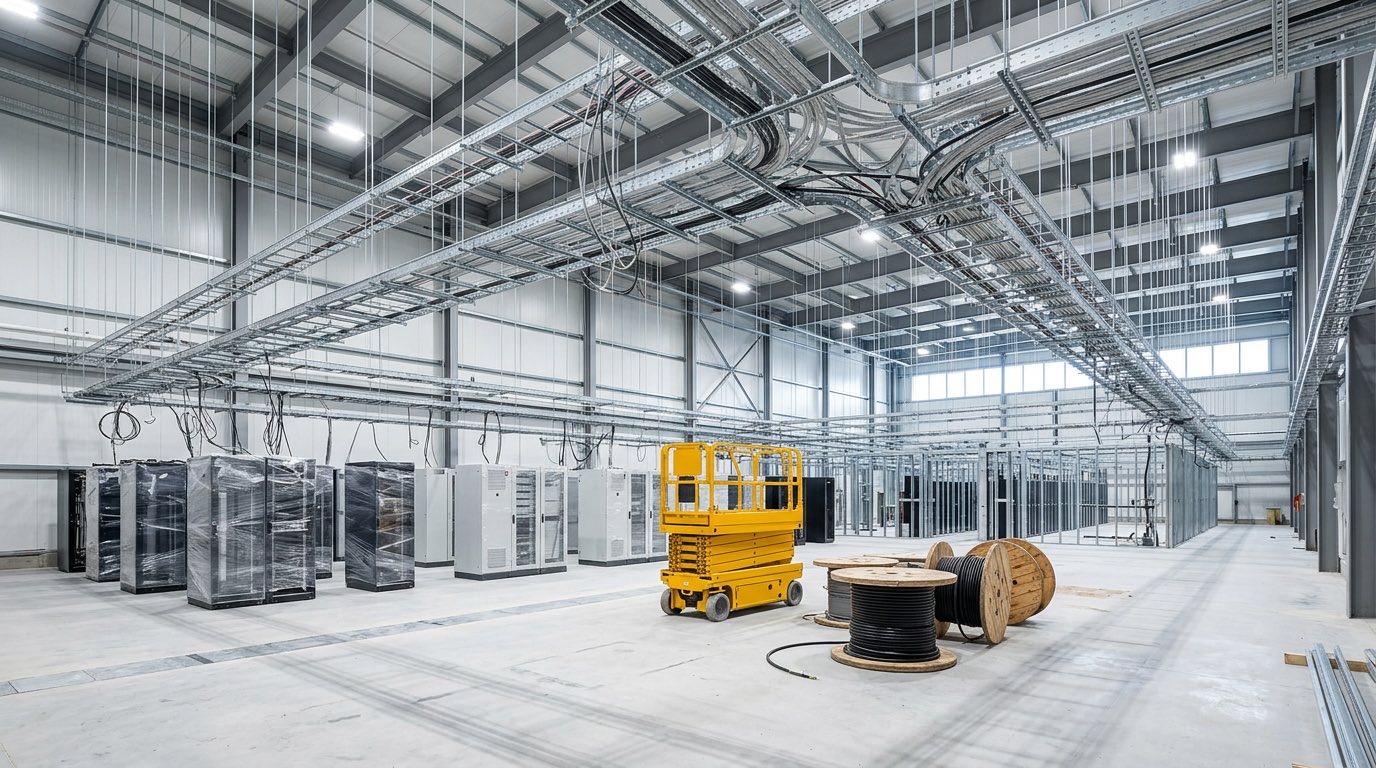
Its national summary says construction and real estate activity "increased slightly overall, with several Districts noting growth in data center building."
Building That Stands Out
In the Philadelphia district, nonresidential construction appeared little changed after slight declines in the prior two periods, with contacts reporting continued construction by firms in the data center and related manufacturing spaces "but little new activity elsewhere." Chicago's report has nonresidential construction unchanged, with activity that "remained robust in the data center and electricity generation segments." In Dallas, office, apartment and retail construction remained subdued, the report says, while data center and industrial construction "were robust."
An electrical contractor in North Dakota, quoted in the Minneapolis district's report, said that "If you are not directly involved in data center work, the broader construction market feels relatively weak." That is one contractor, in one district.
What Holds Projects Back
In Dallas, "Data center capacity demand has increased, but new projects are being hindered by limited access to energy, supply chain disruptions, and public pushback." In the Philadelphia district, a contact "reported that a shortage of electricians has delayed data center projects in the region." That, again, is one contact.
The Dallas report names access to energy beside supply chains and public pushback. For a developer, the question is which of the three a schedule can absorb, and which it cannot.
In Factories and Freight
Data center demand also shows up in the districts' reports on factories and freight. In the Cleveland district, "Data center development continued to drive demand for metal products and electrical components." Chicago's primary metals wholesalers and manufacturers reported a slight increase in demand, "driven by sales to the defense sector and data center builders," and machinery sales increased strongly across a variety of sectors, "including to defense and data center builders." In the Atlanta district, freight growth was concentrated in data center construction, machinery, aerospace and defense.
The report places data center demand on building sites, in factories and in freight at once. Where that demand meets the same crews and suppliers, a delay at one of them can reach many projects together, and a summary of contacts cannot say which.
Sources
- Federal Reserve System. The Beige Book: Summary of Commentary on Current Economic Conditions by Federal Reserve District, July 2026. July 2026. central bank