Once a year the Federal Energy Regulatory Commission holds what it calls its "annual Commissioner-led Reliability Technical Conference." This year's meets on Wednesday, October 21, 2026, "to discuss policy issues related to the reliability and security of the Bulk-Power System." It will be held at the commission's headquarters in Washington, open to the public with no fee for attendance. The commission's notice of September 9, 2026 sets out the agenda. Panel 1, at 10:40 am, carries the title "The State of Reliability in a Changing Energy Landscape," followed by "Operational Challenges of Integrating Large Loads in Evolving System Dynamics."
The notice says that "An additional supplemental notice will be issued prior to the conference with further details regarding the agenda." And it introduces the questions of each panel with the words "This panel may include a discussion of the following topics and questions." May. Parts of the notice follow, not the whole.
Load Growth and System Dynamics
The grid, in the panel's introduction, "is undergoing rapid transformation driven by unprecedented load growth, the emergence of large, energy-intensive loads, and the accelerating deployment of inverter-based resources (IBRs)." Data centers, AI compute campuses, industrialization and other large loads "are developing at a pace that challenges traditional planning and operational frameworks."
The generation side is changing in the same period, the introduction says. The retirement of conventional baseload generators, together with the addition of solar, wind and battery storage, is reshaping system dynamics, "introducing new complexities and challenges related to reserve margins, inertia, protection systems, fuel supply, and disturbance response."
The Load Itself
One question asks how entities should model and plan for "the rapid emergence of large, energy-intensive loads, such as data centers and AI compute campuses, whose scale, timing, and operational characteristics challenge traditional interconnection, transmission planning, and resource adequacy frameworks." It also asks for lessons learned from integrating large loads, and gives as examples the necessity for "validated dynamic load models, updated commissioning procedures, and mandatory disturbance monitoring at points of interconnection."
Those three examples read like a checklist a lender could put to one campus. Is there a load model someone has validated, an updated commissioning procedure, and disturbance monitoring at the point of interconnection?
Another question turns to inertia, and asks how operators should quantify and manage "the reliability implications of declining system inertia in regions with rapid interconnection of large loads and where IBR penetration is accelerating and replacing conventional generation." A further one asks about security: what the primary cybersecurity and physical security risks of integrating large loads onto the grid are, and which are unique to specific types of large loads, with data centers, crypto mining and industrial loads given as examples.
Gas and Fuel
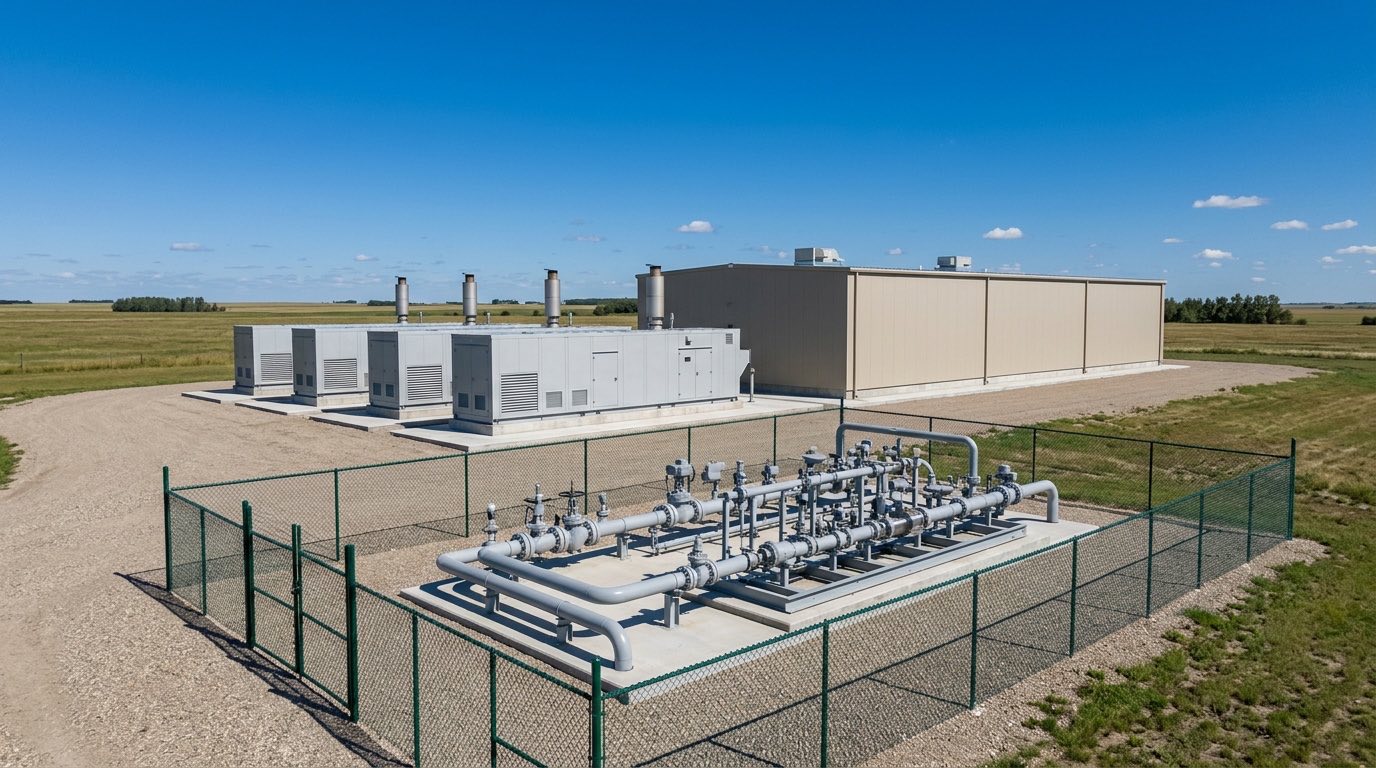
On gas, the panel may discuss how utilities account for "the interaction of behind-the-meter gas-fired generators compared to front-of-meter gas-fueled power generators on the same pipeline in planning and operations." Behind the meter and in front of it. One pipeline.
For a campus with its own gas plant, that question has a lender's twin. Who else draws gas from the same pipe on the day the system is short, and whose gas is firm?
"Given the high load factor of data centers," another question asks, "what are utilities and RTOs/ISOs doing to ensure that resources used to meet capacity requirements have secure fuel sources to meet an increasingly flat load duration curve?" A high load factor, in the notice's own words.
Sources
- Federal Energy Regulatory Commission. Second Supplemental Notice of Reliability Technical Conference, Docket No. AD26-8-000. September 9, 2026. regulator