Eight times a year the Federal Reserve publishes the Beige Book, its report on current economic conditions across its 12 districts. The Beige Book whose cover reads "October 2026" was prepared at the Federal Reserve Bank of Philadelphia "based on information collected on or before October 5, 2026." It "summarizes comments received from contacts outside the Federal Reserve System and is not a commentary on the views of Federal Reserve officials."
Data centers come up in several districts' sections. Parts of those sections follow, not the whole, each with the district it comes from.
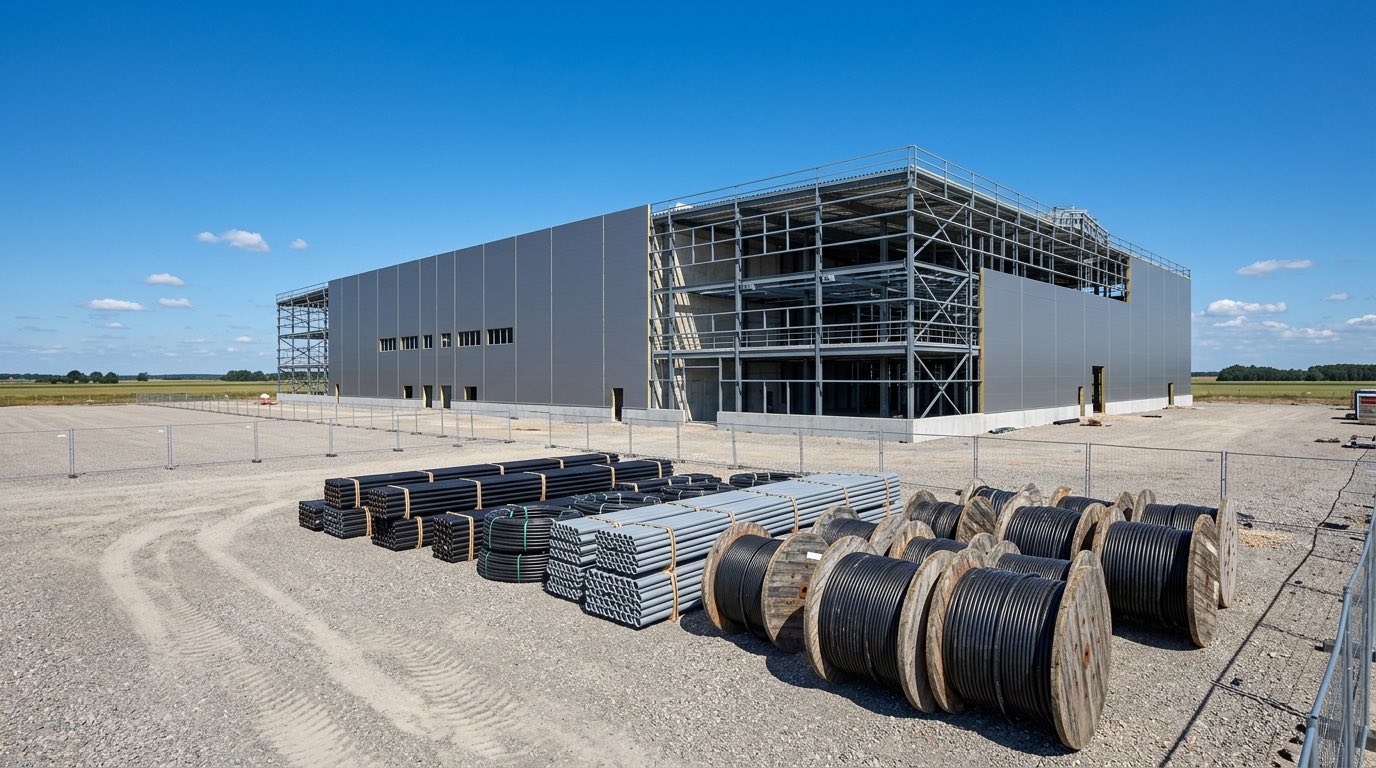
Crowding Out
The Kansas City Fed's summary describes business activity in its district holding steady, in a pattern of subdued conditions punctuated by pockets of strong demand. Durables manufacturing and business services were the strongest segments. In the same sentence, "it was noted that the data center buildout has crowded out other production and put pressure on the labor market." In the section's paragraph on manufacturing and other business activity, durables manufacturing firms "pointed to military contracts and the data center buildout as not only strong, but also as crowding out other production."
Nonresidential construction in the Chicago Fed's district was unchanged, "but activity remained at a robust level." Contacts there "indicated that megaprojects were crowding out capacity for other projects." An equipment distributor said that tech companies "had tried to buy all the available electrical equipment for their data center developments," but that suppliers "had pushed back because of commitments to other projects." One distributor, in one district.
The distributor's line names the question a lender puts to a campus with a date to meet. Is the electrical equipment already ordered and promised, or still to be won from suppliers with commitments to other projects?
Freight, Materials and Workers
Transportation costs grew notably as diesel prices rose, the Atlanta Fed's paragraph on prices says, "and demand for rapid delivery of items related to data center projects strained freight and shipping capacity." Data center demand touches materials. Builders in the Richmond Fed's district "cited challenges with materials tied to data center demand," and noted they could pass these costs to buyers "as long as they were transparent about the price increases being genuine."
There were "continued reports of data center construction driving up labor costs and drawing workers away from other industries," the Dallas Fed's section on labor markets says. Data center developers in that district "are still finding it difficult to locate qualified workers, such as electricians and technicians, and building costs continue to rise for projects already underway."
Pay for electricians comes up in the San Francisco Fed's district. Its contacts reported wage pressures across the district in manufacturing, "including a large contractor in the Mountain West highlighting that competition from data center projects drove up pay for electricians and other skilled trades workers in the region." One contractor, in the Mountain West.
Moratoriums and a Pause in Texas
The Dallas Fed's section on construction and real estate reports that new construction activity for data centers "has tempered due to a regulatory pause implemented by the state of Texas, which has frozen permits sought by data centers," until their impact on electric grid reliability and on the state's water resources has been examined. Frozen permits, tempered construction. Water usage by AI data centers, the same paragraph adds, "has become more efficient, as developers increasingly adopt closed-loop systems and liquid plate cooling." Public opposition "remains a significant concern, potentially discouraging investment or delaying projects."
A frozen permit has no date of its own. For a project in Texas that still needs one, the day the freeze lifts is now part of the schedule, and nobody in the project controls it.
Moratoriums appear by name elsewhere. "One contractor reported that a local moratorium had led to the cancellation of a data center project," the Cleveland Fed's section on real estate and construction says. Industrial contacts in the Richmond Fed's district expressed ongoing concern over data center moratoriums.
Power, Building and Lending
Utility contacts in the Atlanta Fed's district "described persistent strength in demand from AI-related infrastructure, even with many projects not projected to be operational until the late 2020s." Construction and land development lending in that district expanded amid continued data center buildouts.
Industrial demand "remained strong, largely driven by data centers," in the New York Fed's paragraph on commercial real estate. Construction activity in the San Francisco Fed's district was stable overall, "with activity concentrated for data centers, governmental and infrastructure projects, and semiconductor factories and warehouses."
For any one data center project, which arrives last: the electrical equipment, the electricians, the permit, or the power?
Sources
- Federal Reserve System. The Beige Book: Summary of Commentary on Current Economic Conditions by Federal Reserve District, October 2026. October 2026. central bank